
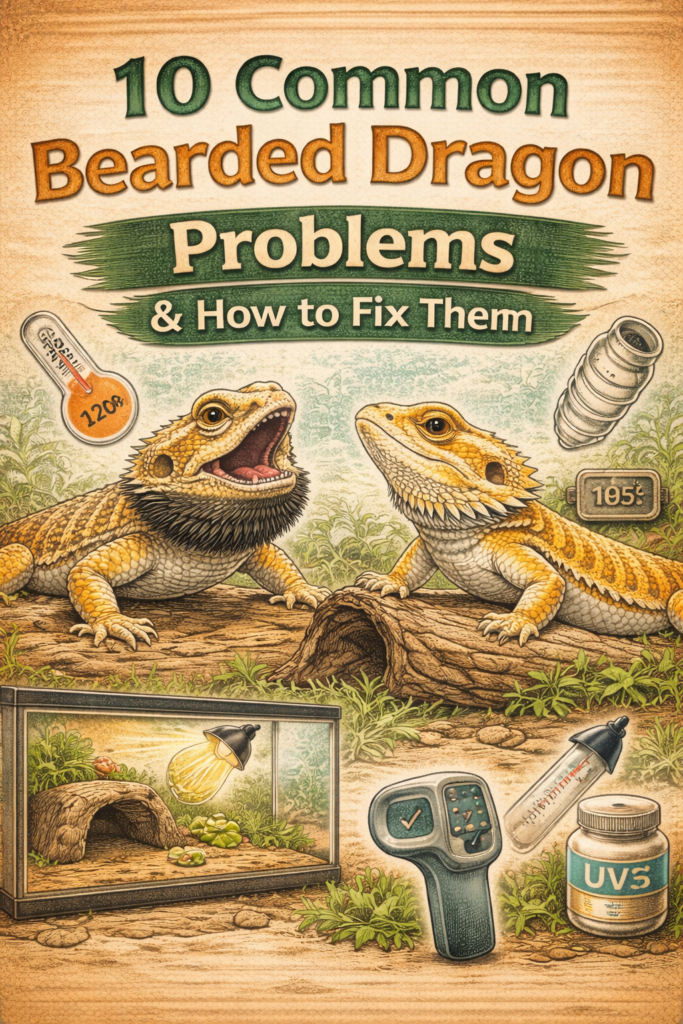
If you’re searching for common bearded dragon problems, you’re not alone.
Most health and behavior issues in captive bearded dragons come down to:
- Incorrect UVB lighting
- Improper basking temperatures
- Small enclosures
- Inadequate supplementation
As someone who has corrected hundreds of setups over the years, I can confidently say this:
When the environment is correct, the majority of problems disappear.
Below is a complete expert breakdown of the most common bearded dragon health and behavior issues — and how to fix them safely.
Some links below are Amazon affiliate links. As an Amazon Associate, I earn from qualifying purchases at no extra cost to you. I only recommend products I personally use in proper bearded dragon setups.
Quick Reference: Essential Equipment That Prevents Most Problems
1. Bearded Dragon Not Eating
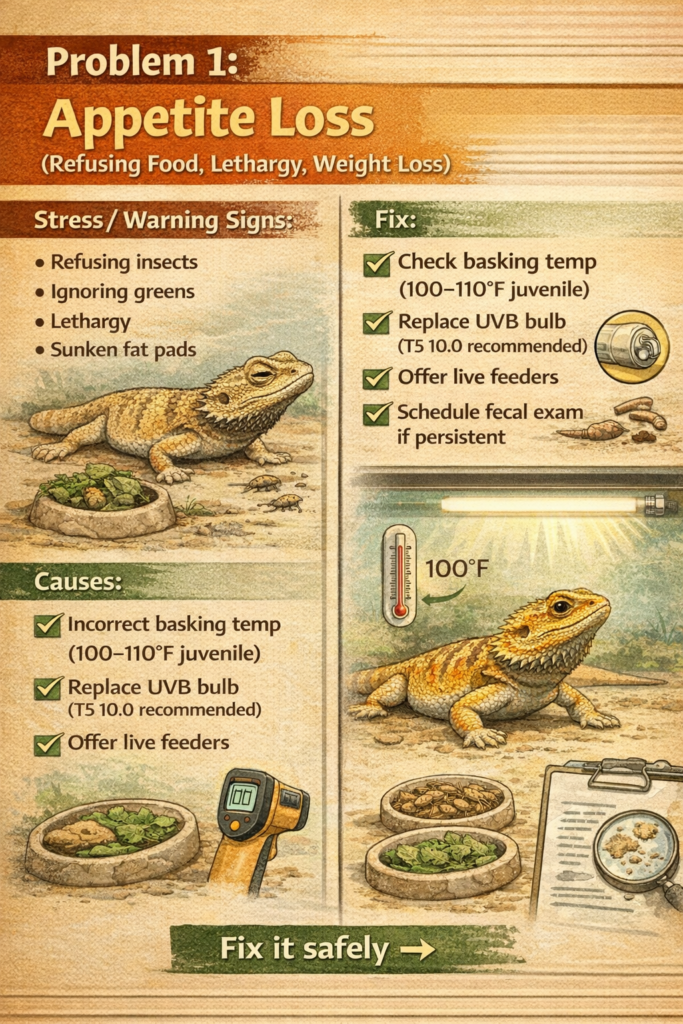
Why Is My Bearded Dragon Not Eating?
Loss of appetite is one of the most searched bearded dragon problems.
Common Causes
- Low basking temperature
- Weak or expired UVB bulb
- Parasites
- Relocation stress
Bearded dragons cannot digest properly without adequate heat and UVB exposure.
How to Fix Appetite Loss
✔ Ensure basking spot reaches 100–110°F (juveniles)
✔ Use a T5 HO 10.0 UVB fixture (mounted inside enclosure)
✔ Replace UVB bulbs every 6–12 months
✔ Schedule fecal exam if no improvement
👉 Recommended T5 HO UVB Fixture
2. Bearded Dragon Black Beard Meaning
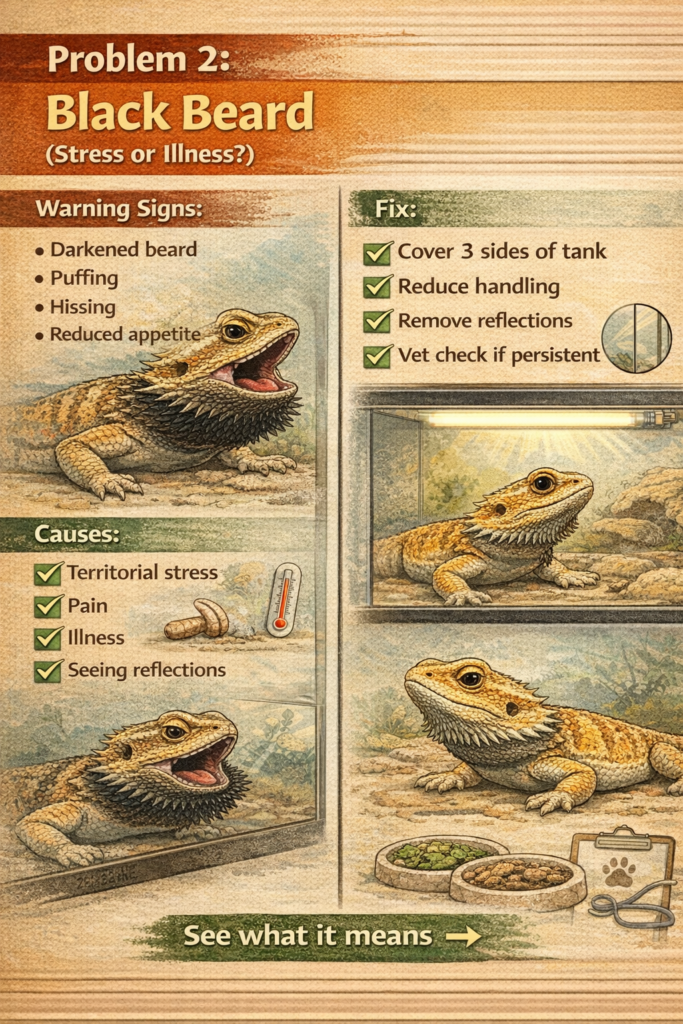
What Does a Black Beard Mean?
A black beard in bearded dragons signals stress, territorial behavior, or pain.
Common Causes
- Reflection in glass
- Overhandling
- Illness
- Seeing another dragon
How to Fix Black Beard Stress
✔ Cover 3 sides of tank
✔ Reduce reflections
✔ Limit handling
✔ Monitor appetite and energy
Persistent black beard with lethargy requires veterinary evaluation.
3. Bearded Dragon Glass Surfing
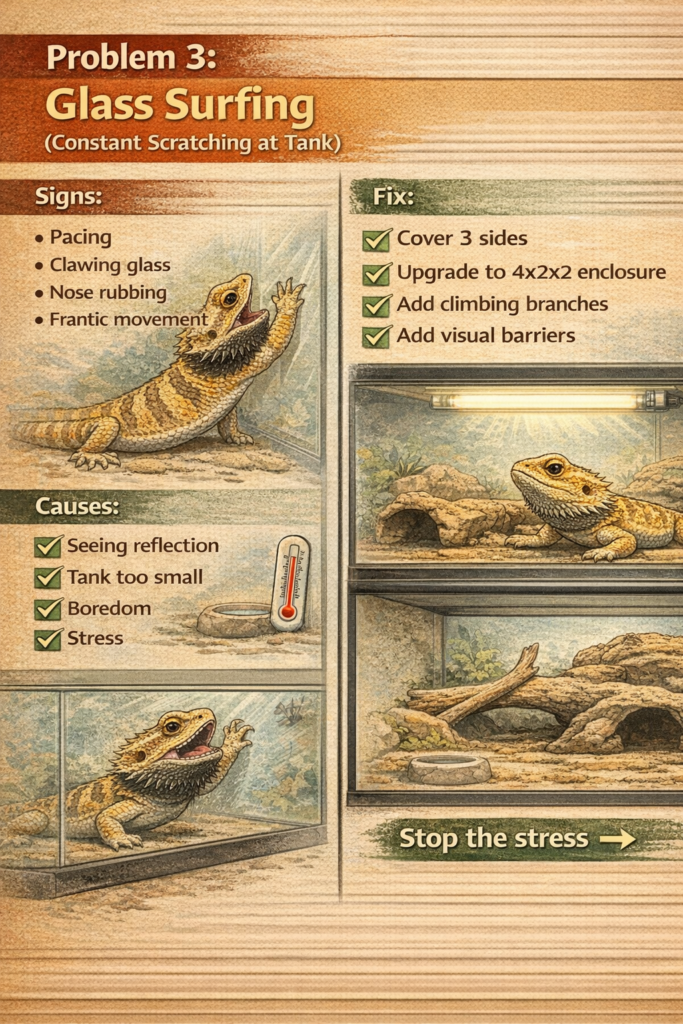
Why Is My Bearded Dragon Scratching the Glass?
Glass surfing is usually a setup issue.
Causes of Glass Surfing
- Tank too small
- Boredom
- Seeing reflection
- Stress
Adult dragons require a minimum 4x2x2 enclosure.
How to Stop Glass Surfing
✔ Upgrade enclosure size
✔ Add climbing branches
✔ Add visual barriers
✔ Increase environmental enrichment
4. Metabolic Bone Disease in Bearded Dragons
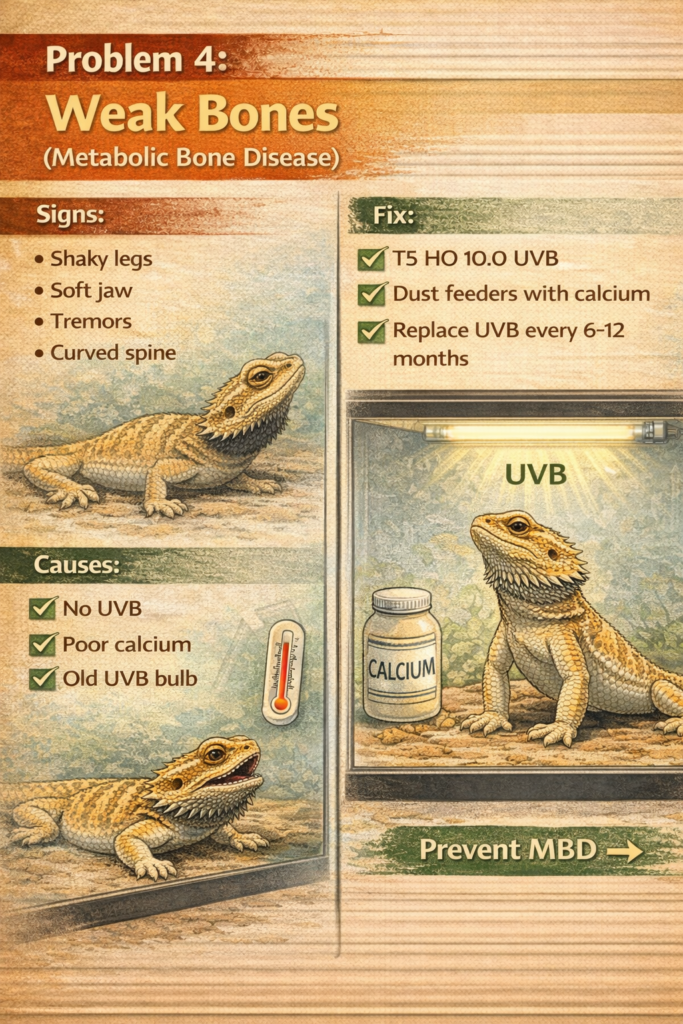
MBD is one of the most serious yet preventable conditions.
Signs of MBD
- Shaky legs
- Soft jaw
- Curved limbs
- Tremors
Causes of Metabolic Bone Disease
- Weak UVB
- No calcium supplementation
- Old UVB bulbs
How to Prevent MBD
✔ Use T5 HO 10.0 UVB
✔ Replace UVB every 6–12 months
✔ Dust feeders with calcium
5. Bearded Dragon Constipation & Impaction
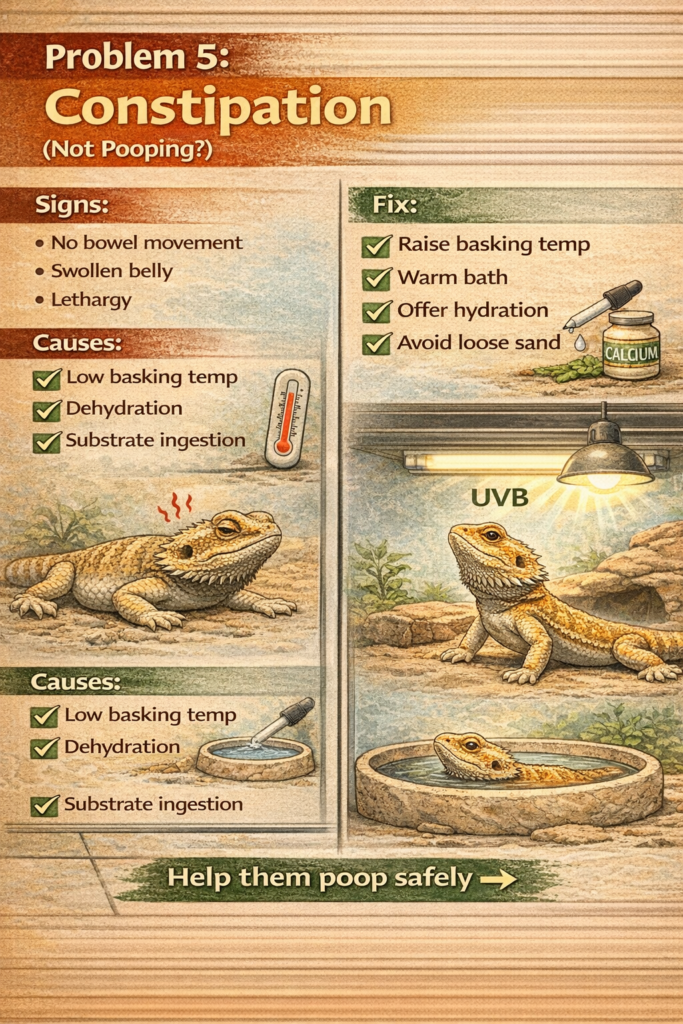
Why Is My Bearded Dragon Not Pooping?
Constipation is commonly linked to low basking temperatures.
Causes
- Low heat
- Dehydration
- Loose sand ingestion
How to Fix Constipation
✔ Increase basking temperature
✔ Warm soak (15–20 minutes)
✔ Remove loose sand substrate
6. Bearded Dragon Dehydration
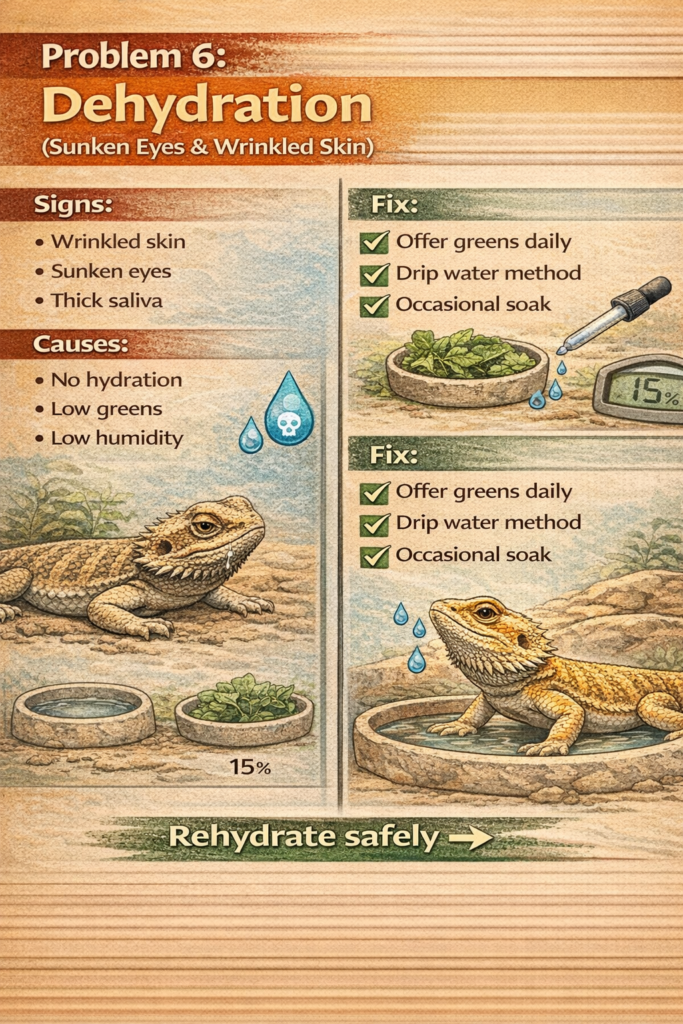
Bearded dragons do not always drink from bowls.
Signs of Dehydration
- Wrinkled skin
- Sunken fat pads
- Thick saliva
How to Rehydrate a Bearded Dragon
✔ Offer fresh greens daily
✔ Drip water on snout
✔ Occasional warm soaks
Proper hydration improves shedding and digestion.
7. Bearded Dragon Tail Rot
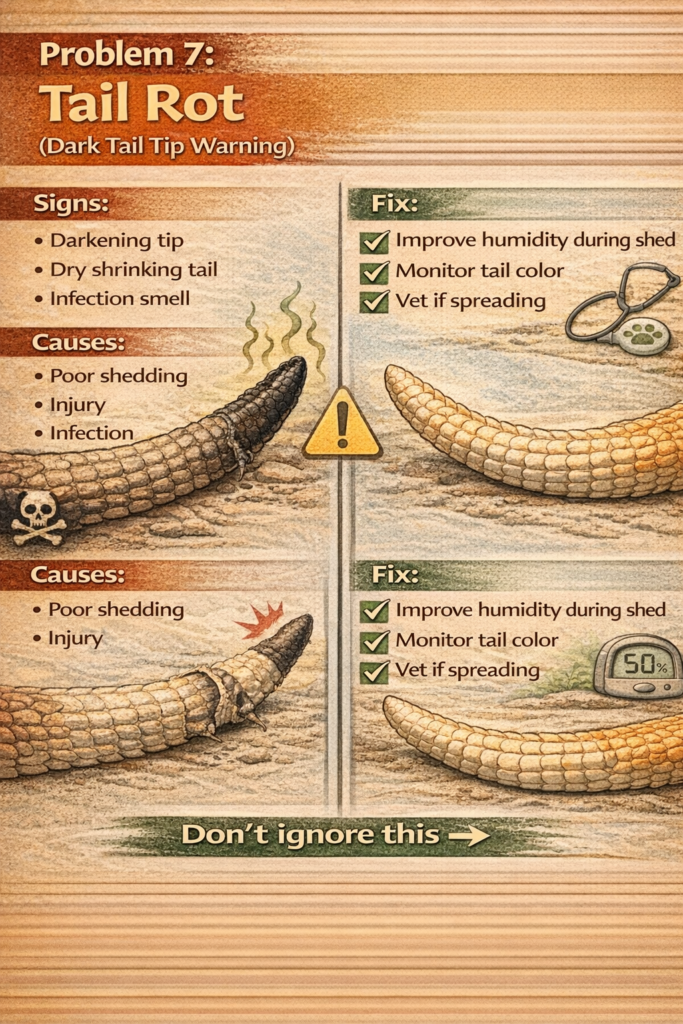
Tail rot is a medical issue that should never be ignored.
Early Signs
- Darkening tail tip
- Dry, shrinking tissue
- Discoloration spreading upward
Causes
- Retained shed
- Injury
- Infection
What to Do for Tail Rot
✔ Improve humidity during shedding
✔ Monitor progression
✔ Seek reptile vet if spreading
8. Bearded Dragon Overheating
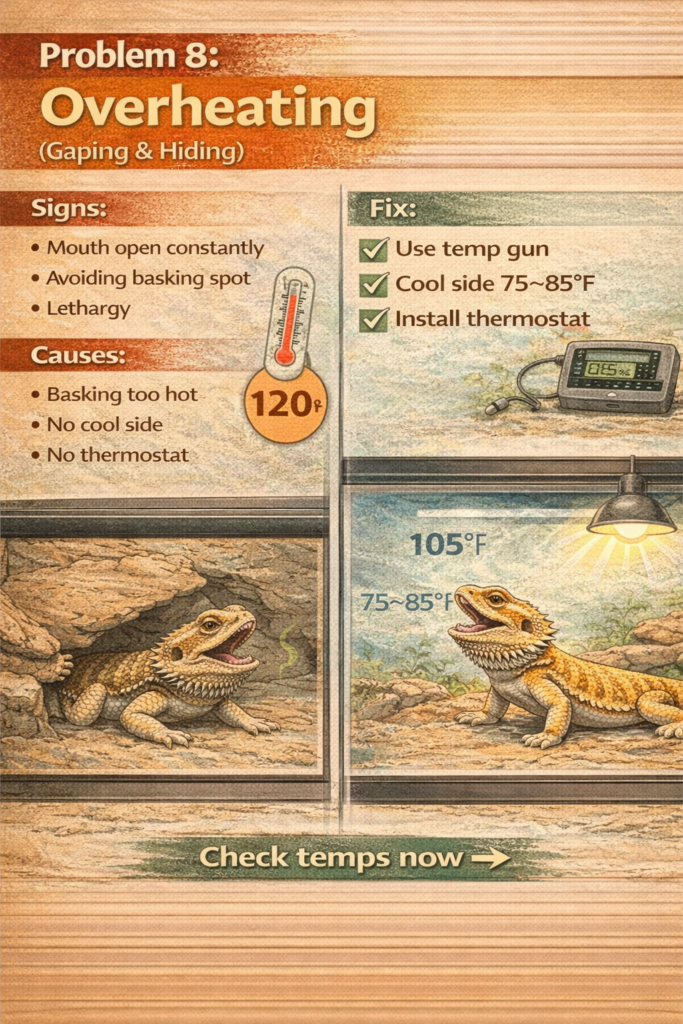
Signs of Overheating
- Constant mouth gaping
- Hiding from basking area
- Lethargy
Causes
- Basking too hot
- No cool side
- No thermostat
How to Prevent Overheating
✔ Use digital thermostat
✔ Maintain proper gradient
✔ Use temp gun regularly
👉 Recommended Reptile Thermostat
9. Bearded Dragon Stress From Handling
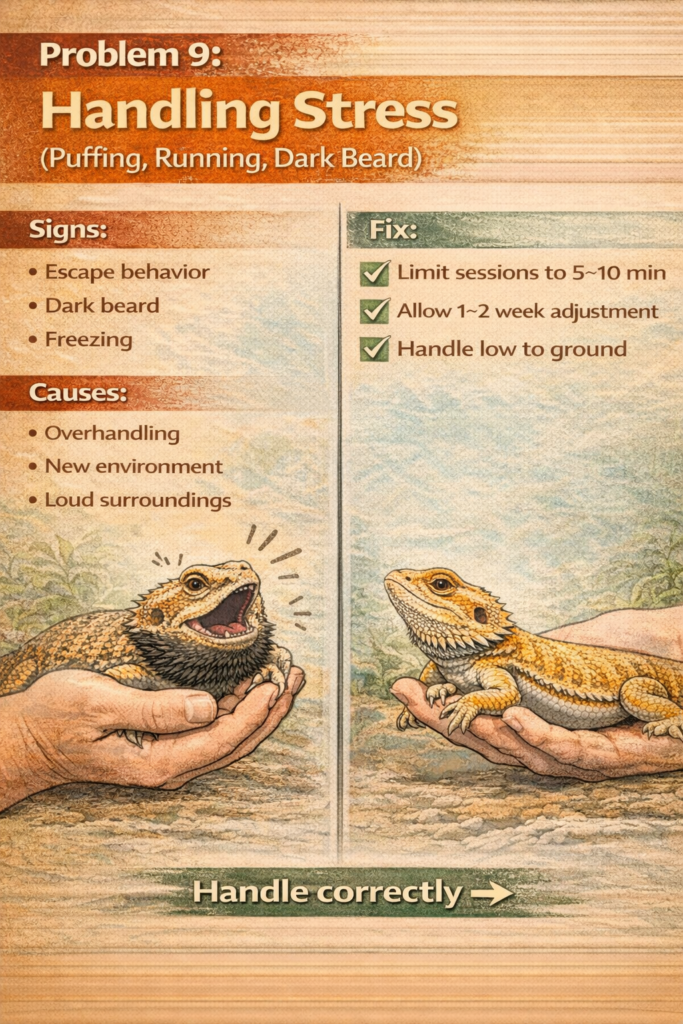
Signs of Handling Stress
- Dark beard
- Puffing
- Attempting escape
How to Handle Properly
✔ Wait 1–2 weeks after bringing home
✔ Keep sessions short
✔ Support entire body
Consistency builds trust.
10. Bearded Dragon Tank Size Requirements
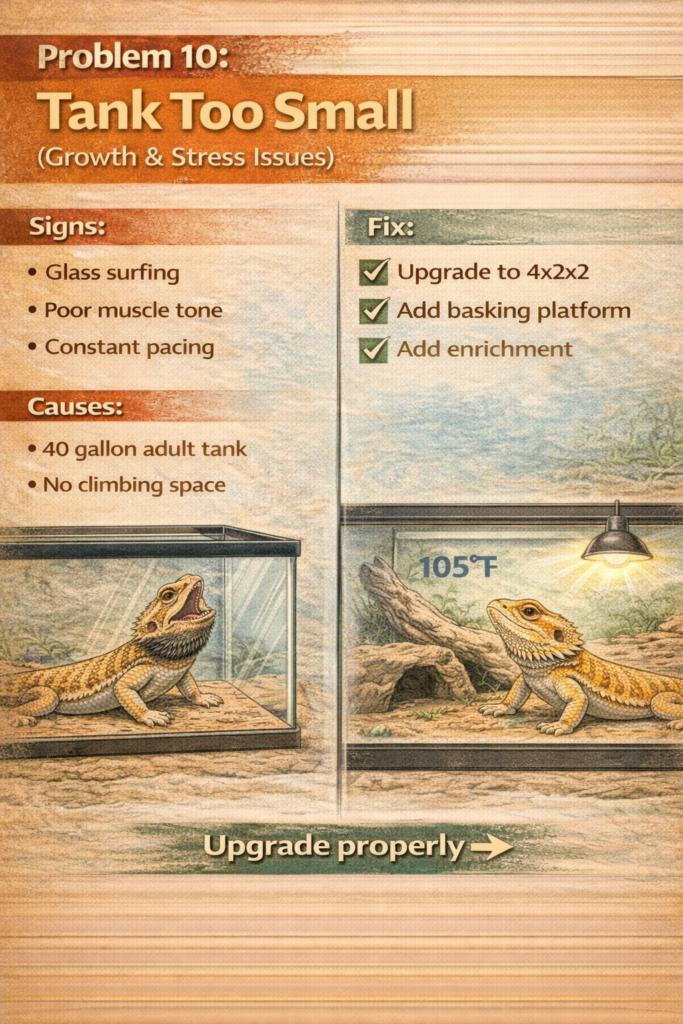
What Size Tank Does a Bearded Dragon Need?
- Juvenile: 40 gallon minimum
- Adult: 4x2x2 enclosure minimum
Small tanks lead to:
- Glass surfing
- Stress
- Poor muscle development
How to Upgrade Properly
✔ Provide basking platform
✔ Multiple hides
✔ Climbing enrichment
FAQ: Common Bearded Dragon Questions
Why is my bearded dragon not eating but acting normal?
Usually temperature or UVB issue.
How often should I replace UVB bulbs?
Every 6–12 months depending on brand.
Is mouth gaping normal?
Yes while basking — no if constant while hiding.
Can I use sand substrate?
Loose sand is not recommended for beginners due to impaction risk.
Final Expert Advice
If you want to prevent 90% of common bearded dragon problems:
- Invest in proper UVB
- Use a temperature gun
- Upgrade to a 4x2x2 enclosure
Environment controls health.