
Why Your Cat Is Most Active at Dawn and Dusk (and How They Adapt to Your Schedule)
If your cat suddenly races through the house at 5 a.m., knocks things off shelves at night, or wakes you up just before sunrise, you might wonder:
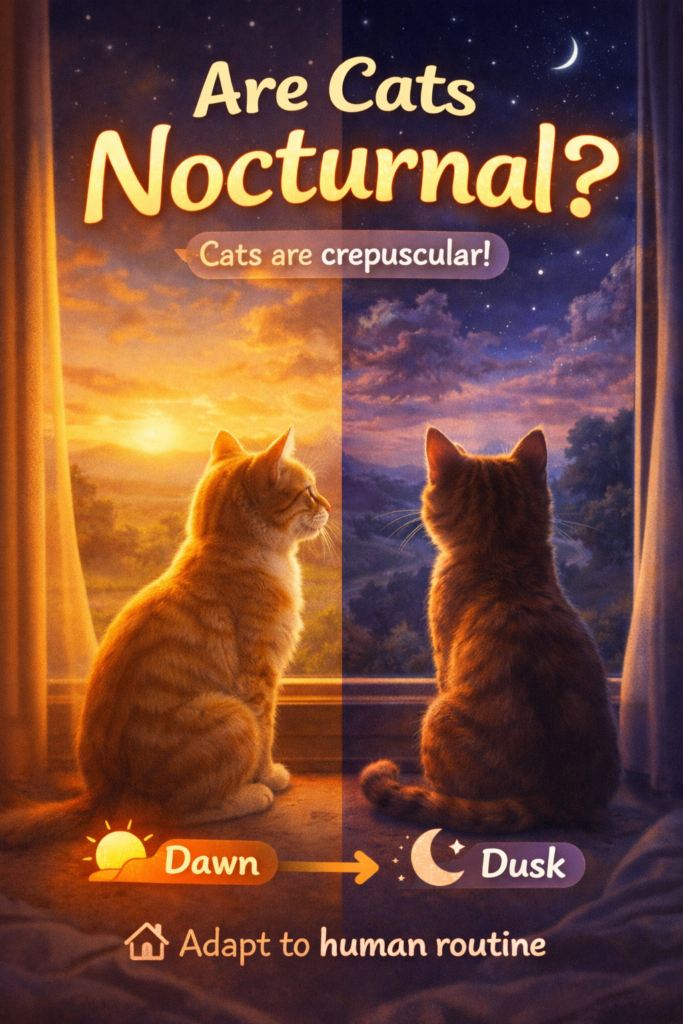
Are cats nocturnal?
The short answer is no — cats are not truly nocturnal.
Instead, cats are crepuscular, meaning they are naturally most active during dawn and dusk. However, domestic cats are also highly adaptable and often adjust their routines to match their human family’s schedule.
Let’s break down what that means, why cats behave this way, and how you can manage your cat’s activity patterns.
What Does “Crepuscular” Mean?
Crepuscular animals are most active during:
- Early morning (dawn)
- Early evening (dusk)
This is different from:
- Nocturnal animals, which are active at night (like owls or bats)
- Diurnal animals, which are active during the day (like humans)
Cats evolved as twilight hunters, and their instincts are still hard-wired for this schedule.
Why Are Cats Crepuscular?
1. Hunting Instincts
In the wild, a cat’s primary prey—small rodents and birds—are most active at dawn and dusk. Hunting during these times:
- Requires less energy
- Improves hunting success
- Avoids larger predators active during full daylight
Even indoor cats retain this instinct, which explains why they often:
- Become playful early in the morning
- Show bursts of energy in the evening
- “Zoom” around the house at seemingly random times
2. Superior Low-Light Vision
Cats have exceptional vision in low-light conditions. Their eyes are designed to:
- Capture more light than human eyes
- Detect movement extremely well
- Function best during dim lighting rather than complete darkness
This makes dawn and dusk the perfect activity window for cats.
3. Energy Conservation
Cats are natural ambush predators. They spend long periods resting so they can unleash short bursts of intense energy when needed.
This is why cats may:
- Sleep 12–16 hours per day
- Appear lazy during midday
- Suddenly become energetic at twilight
If Cats Aren’t Nocturnal, Why Are They Active at Night?
While cats aren’t biologically nocturnal, your cat’s behavior may still seem nighttime-focused — and there are a few reasons why.
1. Your Cat Has Adjusted to Your Routine
Domestic cats are remarkably adaptable.
If you:
- Feed your cat late
- Play with them at night
- Respond to nighttime attention-seeking
Your cat may shift their activity to match when they get interaction.
Over time, this teaches your cat:
“Humans are awake and responsive at this time.”
2. Boredom During the Day
If a cat spends the day alone with little stimulation, they may:
- Sleep excessively during daylight hours
- Store energy
- Release it all at night
This often leads to:
- Nighttime zoomies
- Vocalizing
- Knocking items over
- Attention-seeking behavior
3. Hunger Cycles
Cats are designed to eat small, frequent meals. If your cat’s last meal is early in the evening, they may wake you up before dawn asking for food.
This is one of the most common reasons cats are active early in the morning.
Do Cats Sleep at Night?
Yes — cats do sleep at night, just not necessarily all night.
Cats sleep in short cycles and may:
- Nap
- Wake briefly
- Move locations
- Resume sleeping
This pattern can make it seem like they’re awake all night, even though they’re getting plenty of rest.
How Cats Adapt to Human Schedules
One of the most interesting things about cats is their ability to synchronize with their owners.
Cats often:
- Wake when you wake
- Nap when you’re at work
- Become active when you come home
- Sleep nearby when you sleep
This adaptation is driven by:
- Feeding times
- Play schedules
- Attention patterns
- Household noise and lighting
Over time, your cat learns when interaction is most likely and adjusts accordingly.
How to Reduce Nighttime Cat Activity
If your cat’s schedule doesn’t match yours, here are practical ways to help realign it.
1. Increase Evening Playtime
Engage your cat in interactive play in the early evening:
- Wand toys
- Laser pointers (end play with a treat)
- Chasing and jumping games
This mimics hunting and helps burn energy before bedtime.
2. Feed a Small Meal Before Bed
Offering a meal after play helps:
- Satisfy hunger
- Trigger a natural “hunt → eat → sleep” cycle
- Encourage longer sleep stretches overnight
3. Ignore Nighttime Attention-Seeking
As hard as it is, responding to nighttime meowing or antics teaches your cat that it works.
Consistency is key:
- Don’t feed or play during unwanted hours
- Reward calm behavior during appropriate times
4. Enrich Daytime Environment
Provide stimulation while you’re away:
- Window perches
- Puzzle feeders
- Rotating toys
- Bird feeders outside windows
A mentally stimulated cat is less likely to be restless at night.
When Night Activity Could Signal a Problem
While crepuscular behavior is normal, excessive nighttime activity may indicate:
- Anxiety
- Hyperthyroidism (especially in older cats)
- Cognitive changes in senior cats
- Lack of stimulation
- Pain or discomfort
If nighttime behavior suddenly increases or is paired with:
- Weight loss
- Excessive vocalization
- Aggression
- Litter box changes
…it’s best to consult a veterinarian.
Final Answer: Are Cats Nocturnal?
No — cats are crepuscular, not nocturnal.
They are biologically designed to be most active at dawn and dusk, but they are also highly adaptable and often adjust their schedule to fit their human household.
Understanding this natural rhythm helps you:
- Interpret your cat’s behavior
- Reduce nighttime disruptions
- Create a healthier routine for both you and your cat
With the right balance of play, feeding, and enrichment, your cat’s schedule can align much more closely with yours.