
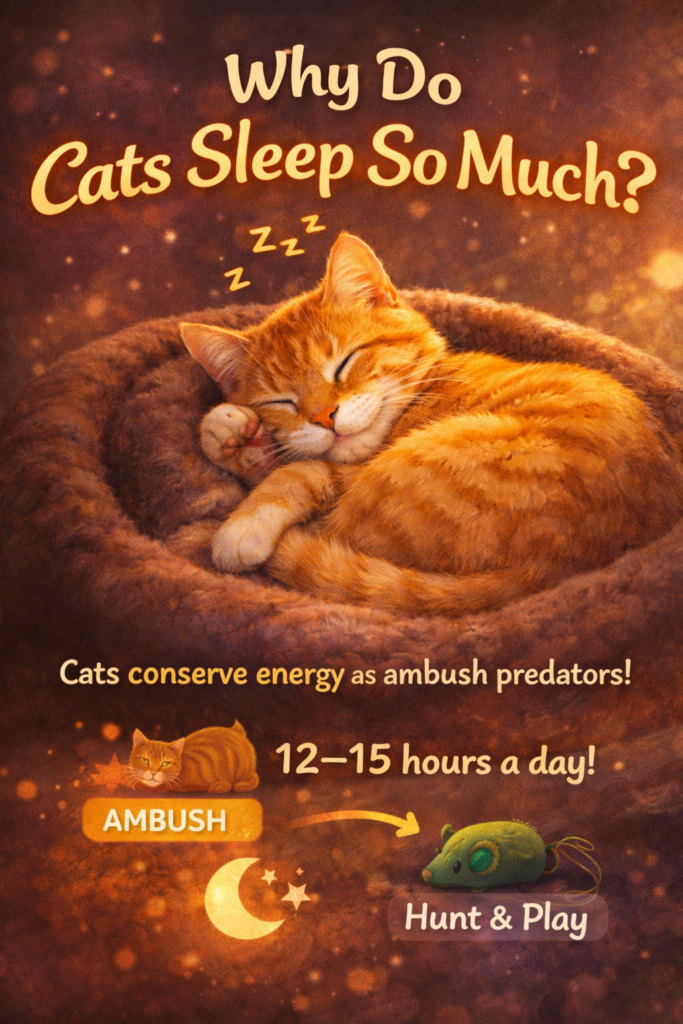
The Evolutionary, Biological, and Behavioral Reasons Cats Sleep Up to 15 Hours a Day
If you’ve ever looked around your house and realized your cat has been asleep most of the day, you’re not alone. One of the most common questions cat owners ask is:
Why do cats sleep so much?
The short answer is that cats are biologically designed to sleep a lot. An average adult cat sleeps 12 to 16 hours per day, and some cats—especially kittens and seniors—can sleep up to 20 hours a day.
This isn’t laziness. It’s evolution.
Let’s break down exactly why cats sleep so much, when it’s normal, when it might signal a problem, and how feline sleep patterns differ from humans.
How Much Do Cats Sleep on Average?
Most adult cats sleep:
- 12–16 hours per day
Kittens may sleep:
- 18–22 hours per day
Senior cats may sleep:
- 16–20 hours per day
Cats don’t sleep all at once, though. Instead, they nap in short sleep cycles spread throughout the day and night.
The Evolutionary Reason Cats Sleep So Much
Cats Are Ambush Predators
Domestic cats evolved from wild feline hunters. Unlike endurance predators (such as wolves), cats are ambush predators.
This means they:
- Use short, explosive bursts of energy
- Rely on speed, precision, and timing
- Don’t chase prey for long distances
To support this hunting style, cats must conserve energy, which is why they spend so much time resting.
Sleep allows cats to:
- Restore muscle strength
- Preserve energy for hunting
- Stay alert during peak activity times (dawn and dusk)
Energy Conservation Is Survival
In the wild, wasting energy could mean:
- Missing a meal
- Failing a hunt
- Increased risk of injury
Even though house cats don’t hunt for survival anymore, their bodies still operate on this ancient biological programming.
Cats Are Crepuscular (Not Nocturnal)
Cats are most naturally active during:
- Early morning (dawn)
- Early evening (dusk)
This pattern aligns with when prey animals are most active.
As a result, cats often:
- Sleep heavily during midday
- Nap overnight
- Wake up briefly to check surroundings
- Become energetic during twilight hours
This crepuscular rhythm explains why cats may:
- Seem lazy all day
- Suddenly have bursts of energy in the evening
- Wake owners early in the morning
Why Cats Sleep More Than Humans
1. Different Sleep Architecture
Cats experience:
- Light sleep (dozing)
- Deep sleep
- REM sleep (dreaming)
However, cats spend a higher percentage of time in light sleep, which allows them to wake quickly if needed.
This means:
- A sleeping cat is still alert
- Ears may twitch
- Eyes may partially open
- They can react instantly to sound or movement
2. Muscle Recovery and Growth
Sleep plays a major role in:
- Muscle repair
- Tissue regeneration
- Immune system support
Because cats rely on explosive muscle movement, they need more rest to recover than animals built for endurance.
Why Indoor Cats Sleep Even More
Indoor cats often sleep more than outdoor cats because:
- There’s less stimulation
- Food is readily available
- There’s no need to hunt
- The environment is safe and climate-controlled
Without the need to patrol territory or search for prey, indoor cats naturally spend more time sleeping.
Common Reasons Your Cat Sleeps So Much
1. Normal Biological Behavior
For most cats, sleeping a lot is completely normal and healthy.
Signs of healthy sleep include:
- Normal appetite
- Playfulness when awake
- Social interaction
- Normal grooming habits
2. Age-Related Sleep Patterns
- Kittens sleep more to support growth and brain development
- Adult cats sleep to conserve energy
- Senior cats sleep more due to reduced energy and joint stiffness
3. Boredom or Lack of Stimulation
If a cat doesn’t have enough:
- Mental enrichment
- Interactive play
- Environmental variety
They may sleep simply because there’s nothing else to do.
This doesn’t always mean something is wrong—but enrichment can improve overall wellbeing.
4. Weather and Temperature
Cats often sleep more:
- On cold or rainy days
- During extreme heat
Sleep helps regulate body temperature and conserve energy.
When Sleeping Too Much Could Be a Concern
While long sleep hours are normal, sudden changes are not.
Contact a veterinarian if excessive sleep is paired with:
- Loss of appetite
- Weight loss or gain
- Lethargy when awake
- Hiding behavior
- Reduced grooming
- Behavioral changes
Excessive sleep may sometimes indicate:
- Illness
- Pain
- Infection
- Depression or stress
- Thyroid issues (especially in older cats)
Do Cats Dream?
Yes — cats experience REM sleep, which is associated with dreaming.
You may notice:
- Twitching whiskers
- Moving paws
- Tail flicks
- Soft vocalizations
This is completely normal and suggests active brain activity during sleep.
How to Support Healthy Sleep Patterns in Cats
1. Encourage Play During Active Hours
Interactive play helps:
- Burn excess energy
- Improve sleep quality
- Reduce nighttime restlessness
Aim for play sessions:
- Early morning
- Early evening
2. Create a Comfortable Sleep Environment
Cats prefer:
- Warm, quiet spaces
- Elevated resting spots
- Safe, enclosed areas
Providing multiple sleep options allows cats to rest more comfortably.
3. Maintain a Consistent Routine
Cats thrive on predictability:
- Regular feeding times
- Scheduled play
- Consistent bedtime routines
This helps regulate sleep cycles.
Final Answer: Why Do Cats Sleep So Much?
Cats sleep a lot because they are evolutionarily designed ambush predators. Long rest periods allow them to conserve energy, recover physically, and remain alert during peak activity times.
An adult cat sleeping 15 hours a day is completely normal.
As long as your cat is:
- Eating well
- Playing when awake
- Grooming normally
- Acting like themselves
…their long naps are simply part of being a cat.