
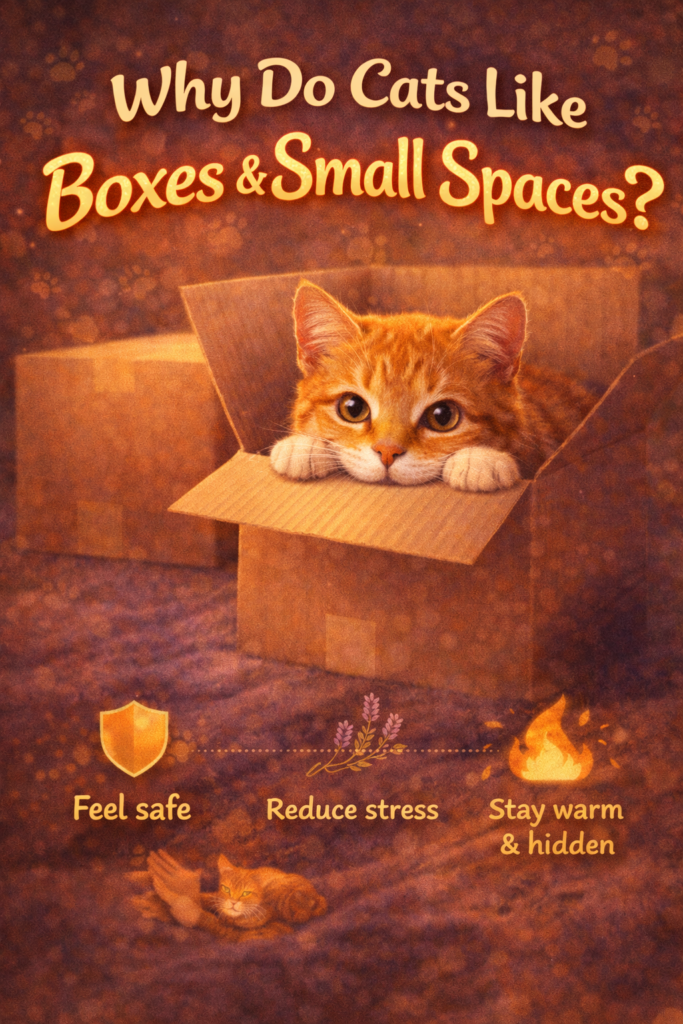
The Instinctive, Psychological, and Survival Reasons Cats Love Cardboard Boxes
If you’ve ever spent money on an expensive cat bed—only to watch your cat climb into an empty cardboard box instead—you’re not alone.
One of the most common (and amusing) questions cat owners ask is:
Why do cats like boxes and small spaces so much?
The answer goes far deeper than “because it’s cute.” Cats’ love for boxes is rooted in evolution, survival instincts, stress reduction, and environmental control. Boxes make cats feel safe, calm, and in control of their surroundings.
Let’s explore exactly why cats are drawn to boxes and enclosed spaces, what it means emotionally and biologically, and how you can use this knowledge to improve your cat’s wellbeing.
The Short Answer: Safety and Security
Cats love boxes because enclosed spaces make them feel safe.
As both:
- Predators (hunters)
- Prey (potential targets)
Cats evolved to seek environments where they can:
- Hide from danger
- Observe without being seen
- Control access points
- Rest without fear
A simple cardboard box provides all of that.
Cats Are Both Predators and Prey
This Dual Role Shapes Everything
Unlike top-of-the-food-chain predators, cats must constantly balance:
- Hunting opportunities
- Personal safety
In the wild, cats are vulnerable to:
- Larger predators
- Ambush threats
- Environmental dangers
This dual role explains why cats instinctively prefer:
- Covered spaces
- Tight enclosures
- Elevated or hidden vantage points
A box gives a cat the perfect balance of concealment and control.
Why Boxes Make Cats Feel So Secure
1. Boxes Reduce Visual Stress 👀
Cats can feel overwhelmed by:
- Open spaces
- Constant movement
- Loud environments
- Too many visual stimuli
A box limits what they can see, which:
- Reduces sensory overload
- Lowers stress hormones
- Creates a calm, predictable environment
Studies have shown that cats with access to hiding spaces adapt faster to new environments and show fewer signs of stress.
2. Boxes Allow Observation Without Exposure
From inside a box, a cat can:
- Watch people move around
- Monitor other pets
- Track sounds and movement
…without being seen themselves.
This gives cats:
- A sense of control
- Predictability
- Confidence
It’s the feline equivalent of sitting in the back row with a perfect view of the room.
3. Enclosed Spaces Trigger Survival Instincts
In nature, small enclosed spaces:
- Protect against predators
- Reduce attack angles
- Offer shelter from weather
When a cat curls into a box, their nervous system interprets it as:
“This is a safe zone.”
That’s why cats often:
- Sleep more deeply in boxes
- Relax faster
- Appear calmer
Why Cardboard Boxes Are Especially Popular
Not all enclosures are equal—cardboard boxes are a feline favorite.
1. Insulation and Warmth 🔥
Cardboard is an excellent insulator.
Cats prefer warm environments because:
- Their ideal temperature range is higher than humans
- Warmth conserves energy
- It mimics the comfort of sleeping with littermates
A cardboard box traps body heat, creating a cozy microclimate.
2. Texture and Scent
Cardboard:
- Absorbs your cat’s scent
- Feels slightly rough and satisfying
- Is safe to scratch or chew
As cats rub against the box, they deposit pheromones that make the space feel even more familiar and comforting.
3. Noise Dampening
Boxes muffle sound, which:
- Reduces stress
- Blocks sudden noises
- Helps anxious cats relax
This is especially helpful in busy households or apartments.
Why Cats Choose Boxes Over Expensive Beds
It’s not about cost—it’s about function.
Many cat beds:
- Are too open
- Don’t offer concealment
- Lack vertical walls
Cats often prefer:
- Snug fits
- Defined boundaries
- Limited entry points
That’s why cats will often squeeze into boxes that seem way too small.
Why Cats Squeeze Into Tight Spaces
“If I Fits, I Sits”
Cats don’t judge comfort by size the way humans do.
Tight spaces:
- Increase body awareness
- Reduce vulnerability
- Provide full-body contact
This pressure can be calming, similar to:
- Swaddling babies
- Weighted blankets
For cats, snug spaces equal safety.
Do Boxes Help Reduce Stress and Anxiety?
Yes — significantly.
Veterinary and behavioral studies have shown that cats with access to hiding spaces:
- Adjust faster to new environments
- Show fewer stress behaviors
- Eat sooner after relocation
- Display more relaxed body language
This is why shelters and vets often recommend boxes for:
- Newly adopted cats
- Post-surgery recovery
- Multi-cat households
When Cats Seek Boxes More Than Usual
While box-loving is normal, increased hiding may signal:
- Stress
- Illness
- Pain
- Environmental changes
Pay attention if box use is paired with:
- Appetite loss
- Lethargy
- Aggression
- Avoidance behavior
In these cases, a vet check may be warranted.
How to Use Boxes to Improve Your Cat’s Life
1. Provide Multiple Safe Spaces
Offer boxes:
- In quiet areas
- At different heights
- Away from litter boxes and food
This gives your cat options and control.
2. Rotate and Refresh Boxes
New boxes = new smells and exploration opportunities.
Cut:
- Side openings
- Viewing holes
- Multiple entrances
This adds enrichment.
3. Use Boxes During Transitions
Boxes help cats cope with:
- Moving homes
- New pets
- New babies
- Visitors
They act as emotional anchors.
Should You Ever Take a Box Away?
Generally, no — unless:
- The box is unsafe
- It’s blocking access to essentials
- Your cat is hiding excessively due to illness
Boxes are not a bad habit—they’re a coping tool.
Final Answer: Why Do Cats Like Boxes and Small Spaces?
Cats love boxes and small spaces because they provide:
- Safety
- Security
- Warmth
- Stress reduction
- A controlled vantage point
As both predators and prey, cats are instinctively drawn to enclosed environments where they can hide, observe, and relax without feeling exposed.
That’s why a simple cardboard box often beats the fanciest cat bed—and why giving your cat access to small, safe spaces is one of the easiest ways to support their mental health.