
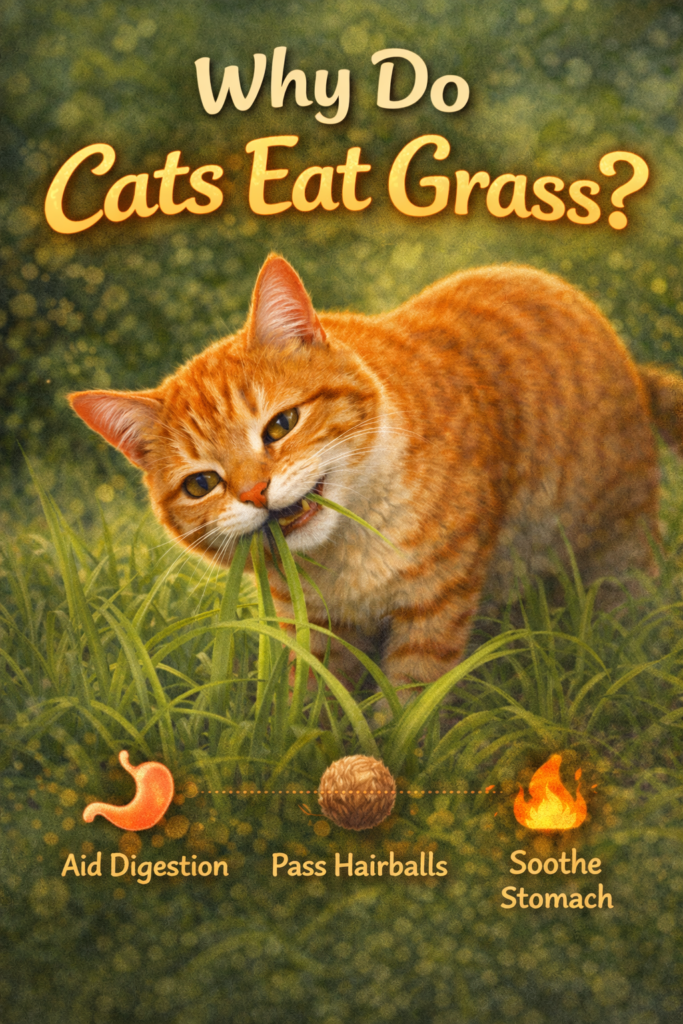
The Digestive, Nutritional, and Instinctive Reasons Behind This Common Feline Behavior
If you’ve ever caught your cat nibbling on houseplants or chewing grass in the yard, you’ve probably asked yourself:
Why do cats eat grass?
It can look strange — after all, cats are obligate carnivores. But eating grass is actually a very common and usually normal behavior in cats, both indoor and outdoor.
Cats may eat grass to:
- Help expel hairballs
- Aid digestion
- Add fiber or micronutrients
- Trigger vomiting when their stomach is upset
- Satisfy instinctual or sensory curiosity
In this guide, we’ll break down why cats eat grass, what it means, when it’s normal, when it’s not, and how to keep your cat safe.
Is It Normal for Cats to Eat Grass?
Yes — grass eating is extremely common in cats.
Studies and observations suggest that the majority of cats eat grass occasionally, regardless of whether they live indoors or outdoors. This behavior has been observed in:
- Domestic cats
- Wild cats
- Big cats (lions, leopards, cheetahs)
This tells us grass eating is instinctive, not a modern or learned habit.
The Most Common Reasons Cats Eat Grass
1. Helping Expel Hairballs 🐈
One of the most widely accepted reasons cats eat grass is hairball management.
Cats groom themselves frequently, which leads to swallowing fur. While most fur passes through the digestive tract, some accumulates in the stomach.
Eating grass may:
- Irritate the stomach lining slightly
- Trigger vomiting
- Help bring up hairballs before they cause blockages
This is why cats often vomit shortly after eating grass — and why the vomit may contain fur.
📌 Important note: Vomiting occasionally after grass eating can be normal. Frequent vomiting is not.
2. Supporting Digestion With Fiber
Grass contains insoluble fiber, which can help:
- Move food through the digestive tract
- Improve bowel regularity
- Reduce constipation
For some cats, eating grass may help settle minor digestive discomfort or improve gut motility.
This doesn’t mean cats need grass nutritionally, but it may support digestive function in small amounts.
3. Providing Micronutrients
While cats get most of their nutrition from animal-based foods, grass contains:
- Trace minerals
- Chlorophyll
- Folate (vitamin B9)
Some researchers believe cats may instinctively seek out grass when they’re low in certain micronutrients, particularly folate, which plays a role in:
- Red blood cell production
- Oxygen transport
That said, cats on a complete, balanced diet should not rely on grass for nutrition.
4. Triggering Vomiting When They Feel Unwell
Cats may eat grass intentionally to induce vomiting if:
- Their stomach feels upset
- They’ve eaten something that doesn’t agree with them
- They need to clear irritants
This is similar to how some animals self-medicate in the wild.
Grass’s texture can stimulate the stomach and throat, making vomiting more likely.
5. Instinct and Evolutionary Behavior
Grass eating has been observed in wild cats for thousands of years.
Possible evolutionary benefits include:
- Expelling intestinal parasites
- Clearing indigestible material
- Supporting gut health
Even though modern house cats don’t face the same challenges as wild cats, the instinct remains.
6. Curiosity or Enjoyment 🌱
Sometimes, the reason is simple:
- Grass smells fresh
- Grass has an interesting texture
- Chewing is mentally stimulating
Cats may eat grass because:
- They enjoy the taste or sensation
- It provides enrichment
- It satisfies exploratory behavior
Not every grass-eating episode has a medical or digestive purpose.
Why Do Some Cats Eat Grass and Others Don’t?
Not all cats eat grass, and that’s normal too.
Factors that influence grass eating include:
- Individual personality
- Diet quality
- Grooming habits
- Digestive sensitivity
- Environmental access
Some cats prefer grass frequently, while others ignore it completely.
Why Do Cats Vomit After Eating Grass?
Vomiting after grass eating is common — but it shouldn’t happen every time.
Cats may vomit because:
- Grass irritates the stomach lining
- The blades tickle the throat
- Hairballs are expelled
Occasional vomiting is normal. However, frequent vomiting is not and should be evaluated by a veterinarian.
Is Eating Grass Dangerous for Cats?
Grass Itself Is Usually Safe — But Plants Are Not
Plain, pesticide-free grass is generally safe. The real danger comes from:
- Houseplants
- Treated lawns
- Toxic greenery
⚠️ Many common plants are toxic to cats, including:
- Lilies
- Aloe vera
- Philodendron
- Dieffenbachia
- Tulips
If a cat eats toxic plants, symptoms may include:
- Drooling
- Vomiting
- Lethargy
- Difficulty breathing
Always verify plant safety.
Should Indoor Cats Be Allowed to Eat Grass?
Yes — as long as it’s safe.
Many owners provide:
- Cat grass (wheatgrass, oat grass, barley grass)
- Indoor planters specifically grown for cats
Cat grass offers:
- A safe alternative to houseplants
- Digestive support
- Enrichment
Never allow cats to chew grass treated with chemicals or pesticides.
When Grass Eating May Signal a Problem
While grass eating is usually harmless, consult a vet if:
- Vomiting becomes frequent or severe
- Grass eating is obsessive
- Your cat shows weight loss
- Appetite changes occur
- Lethargy or diarrhea is present
Excessive grass eating can sometimes indicate:
- Gastrointestinal irritation
- Nutritional imbalance
- Parasites
- Stress or anxiety
How to Safely Support a Grass-Eating Cat
1. Offer Cat-Safe Grass
Grow or purchase:
- Wheatgrass
- Oat grass
- Barley grass
Place it in an easily accessible area.
2. Improve Hairball Prevention
To reduce grass-related vomiting:
- Brush regularly
- Feed hairball-control diets if needed
- Encourage hydration
3. Review Diet Quality
Ensure your cat eats a complete, balanced diet appropriate for:
- Age
- Health
- Activity level
A nutritionally sound diet reduces compensatory behaviors.
Final Answer: Why Do Cats Eat Grass?
Cats eat grass for several instinctive and practical reasons, including:
- Helping expel hairballs
- Supporting digestion with fiber
- Triggering vomiting when unwell
- Seeking micronutrients
- Satisfying natural instincts or curiosity
For most cats, grass eating is normal, occasional, and harmless — as long as the grass is safe and untreated.
Understanding this behavior helps you:
- Protect your cat from toxic plants
- Recognize when grass eating is normal vs concerning
- Support your cat’s digestive health naturally