
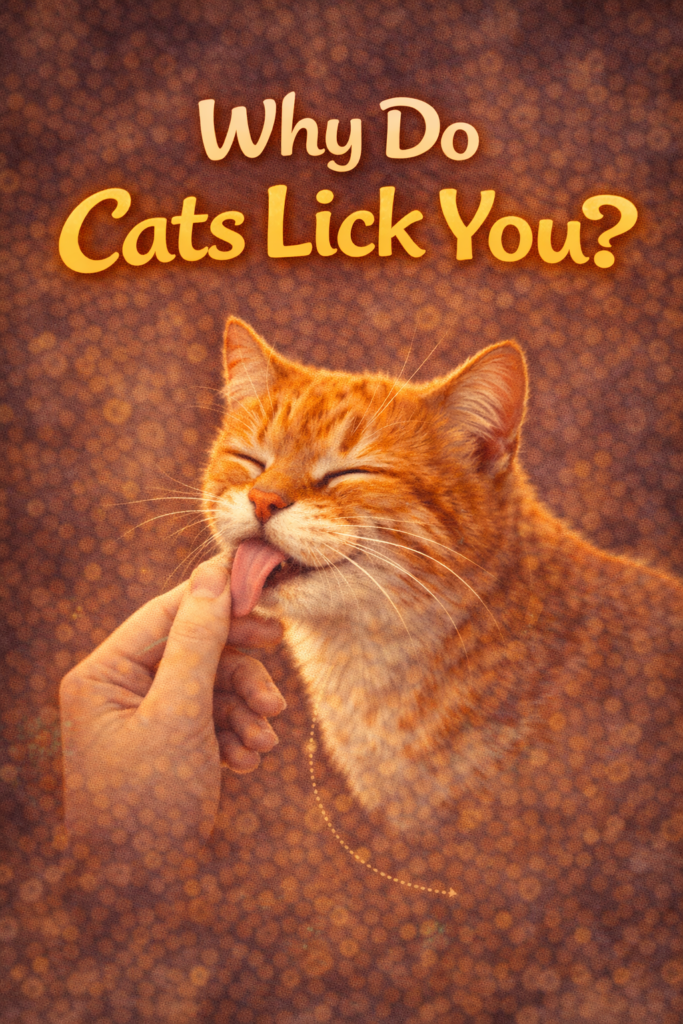
Understanding Grooming, Affection, and Social Bonding in Cats
If your cat has ever licked your hand, arm, face, or even your hair, you may have wondered:
Why do cats lick people? Is it affection—or something else?
In most cases, when a cat licks you, it’s a sign of grooming, trust, and social bonding. But licking can also serve other purposes, and sometimes it can signal stress, overstimulation, or anxiety.
In this article, we’ll explore:
- Why cats lick in the first place
- What it means when your cat licks you
- The difference between affectionate licking and problem licking
- Why licking sometimes turns into biting
- When licking is normal — and when it might be a concern
Grooming Is a Core Cat Behavior
Cats are meticulous groomers. In fact, cats can spend 30–50% of their waking hours grooming.
Grooming helps cats:
- Keep fur clean
- Regulate body temperature
- Remove loose hair
- Distribute natural oils
- Calm themselves
But grooming isn’t only about hygiene—it’s also social.
Why Do Cats Groom Each Other?
In multi-cat households or colonies, cats often engage in allogrooming, which means grooming another cat.
Cats groom each other to:
- Strengthen social bonds
- Reduce tension
- Establish trust
- Reinforce group identity
This behavior usually happens between cats that:
- Are closely bonded
- Feel safe together
- Share territory
Why Do Cats Lick Humans?
When your cat licks you, they are often treating you like another cat—or even family.
1. A Sign of Affection and Bonding ❤️
The most common reason cats lick people is affection.
Your cat may lick you because:
- They trust you
- They feel emotionally bonded
- They enjoy close contact
This is especially true if licking happens during:
- Cuddling
- Petting
- Relaxed moments
- Purring
To your cat, licking you is a way of saying:
“You’re part of my social group.”
2. Grooming You as Part of the Family
Cats groom those they consider safe and familiar.
If your cat licks you, they may be:
- “Helping” you stay clean
- Caring for you the way they would another cat
- Engaging in nurturing behavior
This behavior often stems from kittenhood, when mothers groom their kittens to:
- Clean them
- Comfort them
- Strengthen bonding
3. Marking You With Their Scent
Cats use scent to define their world.
When a cat licks you, they:
- Transfer saliva-based scent markers
- Mix your scent with theirs
- Reinforce familiarity
This helps your cat feel secure and signals:
“This person belongs to me.”
4. Licking as a Self-Soothing Behavior
Licking can also be calming for cats.
Some cats lick:
- When they’re relaxed
- When they’re content
- When they feel slightly anxious
The repetitive motion releases tension and provides comfort, similar to how kneading works.
Why Does Licking Sometimes Turn Into Biting?
Many cat owners notice a confusing pattern:
Lick… lick… bite!
This is often due to overstimulation.
Overstimulation Explained
Cats have sensitive nervous systems. Prolonged petting or contact can overwhelm them.
Signs overstimulation is building:
- Tail flicking
- Ears rotating or flattening
- Tense muscles
- Dilated pupils
Licking may escalate into a gentle bite as a way to say:
“That’s enough.”
This isn’t aggression—it’s communication.
Why Do Some Cats Lick More Than Others?
Not all cats are big lickers.
Factors that influence licking behavior include:
- Personality
- Early socialization
- Bond strength with humans
- Stress levels
- Breed tendencies
Cats that were:
- Hand-raised
- Closely bonded with owners
- Highly social
…may lick people more frequently.
Is Cat Licking Ever a Sign of Stress or Anxiety?
Yes — context matters.
Licking may signal stress if it becomes:
- Excessive
- Compulsive
- Sudden in onset
Stress-related licking may occur due to:
- Environmental changes
- New pets or people
- Boredom
- Anxiety
In these cases, licking acts as a coping mechanism.
When Licking Might Be a Problem
While occasional licking is normal, consult a veterinarian or behaviorist if:
- Licking is constant or obsessive
- It’s paired with hair loss or skin irritation
- Your cat seems anxious or withdrawn
- Licking replaces normal play or interaction
Medical issues, skin conditions, or anxiety disorders can sometimes cause excessive licking.
Should You Let Your Cat Lick You?
In most cases, yes — with boundaries.
Allow licking if:
- It’s gentle and occasional
- Your cat appears relaxed
- You’re comfortable with it
Redirect gently if:
- Licking becomes rough
- It leads to biting
- It feels excessive
Never punish licking—it’s a natural behavior tied to bonding and comfort.
How to Respond to Affectionate Licking
- Stay calm and relaxed
- Gently pet areas your cat enjoys
- Stop interaction if signs of overstimulation appear
- Offer enrichment and play to prevent boredom
Understanding your cat’s signals helps maintain a healthy bond.
Final Answer: Why Do Cats Lick You?
Cats lick people primarily as a form of grooming, affection, and social bonding.
When your cat licks you, they are:
- Expressing trust
- Strengthening emotional bonds
- Marking you as familiar
- Recreating comforting behaviors from kittenhood
In most cases, licking is a positive sign that your cat feels safe and connected to you.