
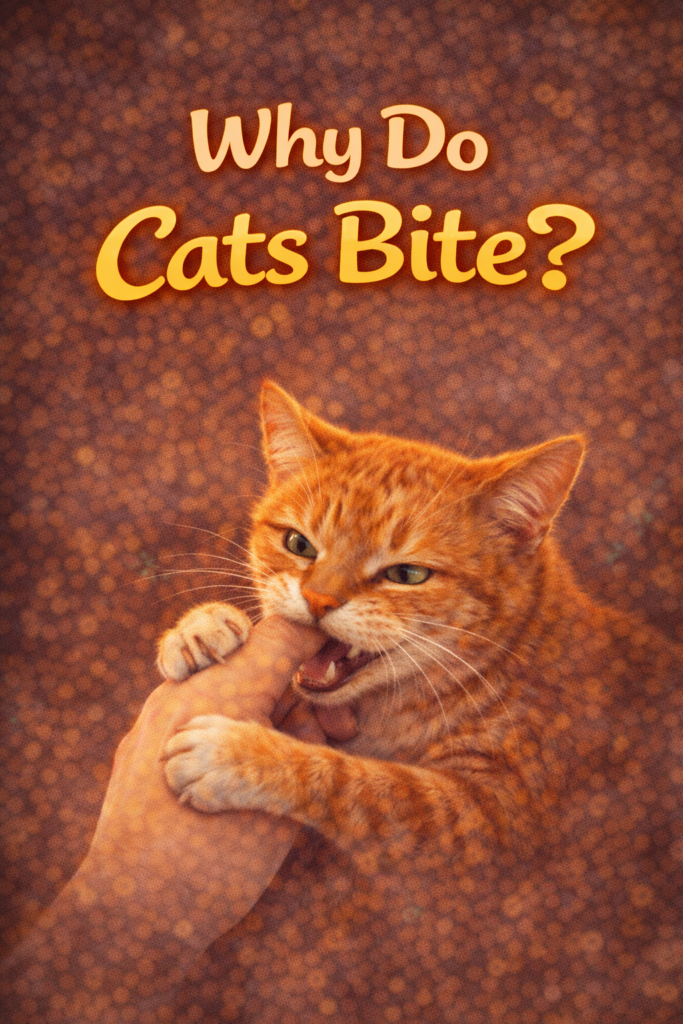
Understanding Overstimulation, Play Biting, and When a Bite Is a Warning
If you’ve ever been petting your cat peacefully—only to suddenly get bitten—you’re not alone. One of the most confusing and frustrating behaviors cat owners experience is unexpected biting.
So, why do cats bite?
In most cases, biting is not aggression. Instead, it’s a form of communication. Cats bite for many reasons, including overstimulation, play behavior, excess energy, fear, or as a clear signal that something needs to stop.
Understanding why cats bite is the key to preventing it and maintaining a healthy, trusting relationship with your cat.
In this article, we’ll cover:
- The most common reasons cats bite
- The difference between playful bites and warning bites
- Body language signs that a bite is coming
- Why petting can suddenly trigger biting
- How to prevent biting behavior
Biting Is a Form of Communication
Cats don’t use words. They communicate through:
- Body language
- Vocalizations
- Tail and ear movement
- Touch—including biting
A bite is often a last-resort message after subtler signals were ignored.
To a cat, biting means:
“I need this to stop right now.”
The Most Common Reasons Cats Bite
1. Overstimulation During Petting 🖐️
This is the #1 reason cats bite humans.
Cats have extremely sensitive nerve endings in their skin. While petting may feel good at first, too much stimulation can quickly become overwhelming.
Common overstimulation triggers:
- Prolonged petting
- Repeated touching in one area
- Petting sensitive zones (belly, lower back, tail base)
When the nervous system becomes overloaded, a cat may bite to make it stop.
Warning signs of overstimulation:
- Tail flicking or thumping
- Ears rotating sideways or flattening
- Skin rippling
- Sudden muscle tension
- Dilated pupils
If these signs are ignored, a bite often follows.
2. Play Biting (Especially in Kittens and Young Cats)
Cats are natural hunters, and play mimics hunting behavior.
Play biting often occurs when:
- Cats are young
- There’s insufficient playtime
- Hands are used as toys
Play biting usually includes:
- Gentle to moderate pressure
- No hissing or growling
- Quick release
This type of biting is not aggressive, but it can become painful if not redirected properly.
3. Pent-Up Energy and Boredom ⚡
Indoor cats, especially, can accumulate excess energy.
Without adequate outlets, that energy may be released through:
- Rough play
- Biting hands or ankles
- Sudden attacks
Cats need:
- Daily interactive play
- Mental stimulation
- Opportunities to stalk, chase, and pounce
Without these, biting can become a way to burn energy.
4. Biting as a Clear Warning
Sometimes, a bite is a boundary-setting behavior.
Cats may bite to say:
- “Stop touching me”
- “I’m uncomfortable”
- “Give me space”
This often happens when:
- A cat feels trapped
- Handling is forced
- The cat is frightened or startled
In these cases, biting is defensive—not malicious.
5. Redirected Aggression
Redirected aggression occurs when a cat is aroused or stressed by something they can’t reach—then bites whoever is nearby.
Triggers may include:
- Seeing another animal through a window
- Loud noises
- Sudden movements
- Stressful environments
The bite isn’t personal—it’s misdirected energy.
Why Do Cats Bite While Being Petted?
This behavior confuses many owners.
Petting-related bites often happen because:
- The cat enjoyed petting at first
- Sensory input built up too much
- The cat needed a break
Cats don’t always walk away—they may expect you to stop.
This is why reading early body language cues is critical.
Play Biting vs Aggressive Biting: How to Tell the Difference
Play Biting
- Occurs during play
- No fear signals
- Loose body posture
- Usually inhibits full bite force
Aggressive or Fear-Based Biting
- Stiff body posture
- Hissing or growling
- Flattened ears
- Hard bites that break skin
Aggressive biting requires professional guidance from a vet or behaviorist.
Why Some Cats Bite More Than Others
Several factors influence biting frequency:
- Personality
- Early socialization
- Whether hands were used as toys
- Stress levels
- Environment
Cats that weren’t taught bite inhibition as kittens may bite harder as adults.
How to Prevent Cat Biting
1. Learn Your Cat’s Limits
Stop petting before overstimulation occurs.
Short, positive interactions are better than long ones.
2. Never Use Hands as Toys
Always use:
- Wand toys
- Interactive toys
- Tossed toys
This teaches cats that hands are not prey.
3. Increase Daily Playtime
Aim for:
- 2–3 play sessions per day
- 10–15 minutes each
- High-intensity chase and pounce games
This reduces pent-up energy and frustration.
4. Respect Warning Signals
If your cat shows signs of discomfort:
- Stop interaction immediately
- Give space
- Don’t punish
Punishment increases fear and biting risk.
5. Provide Environmental Enrichment
Cats need:
- Vertical spaces
- Scratching posts
- Window views
- Puzzle feeders
A stimulated cat is a calmer cat.
When to Seek Help for Biting
Consult a veterinarian or feline behaviorist if:
- Biting is sudden or escalating
- Bites break skin regularly
- Biting is paired with fear or aggression
- There are signs of pain or illness
Medical issues can sometimes cause irritability and biting.
Final Answer: Why Do Cats Bite?
Cats bite because it’s a natural form of communication.
Most biting stems from:
- Overstimulation
- Play behavior
- Excess energy
- Clear warnings that boundaries have been crossed
Understanding your cat’s body language and respecting their limits can dramatically reduce biting and strengthen your bond.
A biting cat isn’t “bad”—they’re trying to tell you something.