
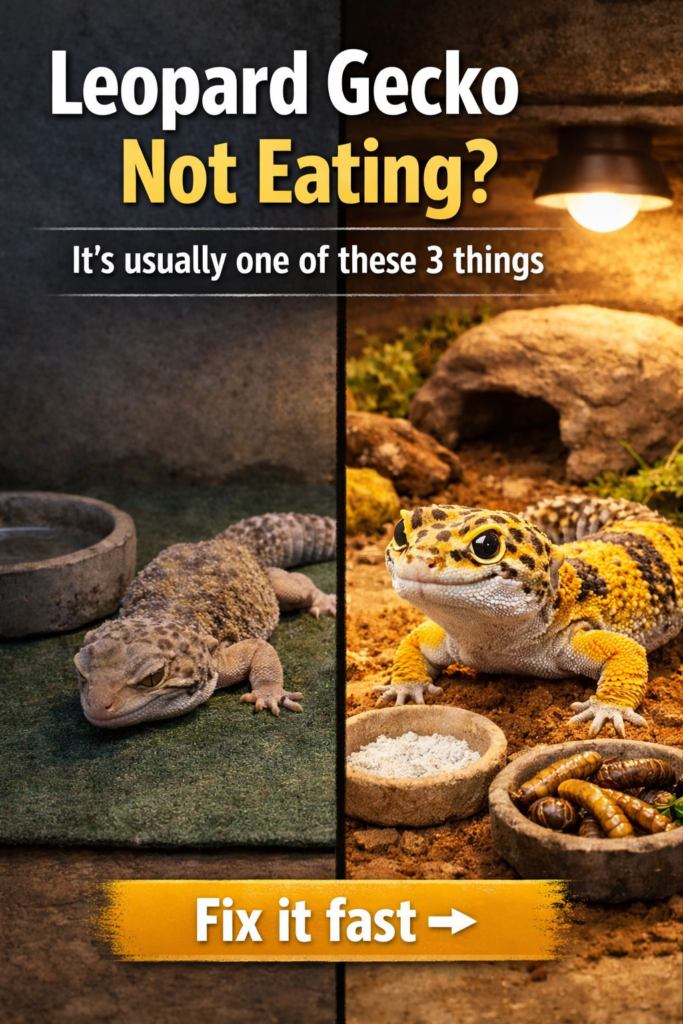
Leopard geckos are one of the most popular pet reptiles in the world—and for good reason. They’re hardy, curious, and surprisingly interactive once their environment is set up correctly.
However, most leopard gecko problems don’t come from “bad pets.” They come from small, invisible setup mistakes that slowly create stress, health issues, and behavioral changes over time.
This guide was created to help you identify the most common leopard gecko problems and fix them permanently through proper habitat design, nutrition, and environmental control.
Disclosure: As an Amazon Associate, I earn from qualifying purchases. Some links in this book are affiliate links, which means I may earn a small commission at no extra cost to you. I only recommend products that are widely used by reptile keepers and chosen based on quality, safety, and reliability.
Quick Product Reference Chart:
| Problem / Need | What It Solves | View on Amazon |
|---|---|---|
| Under Tank Heat Mat | Provides proper belly heat for digestion & activity | View on Amazon |
| Digital Thermometer & Hygrometer | Monitors temperature & humidity accurately | View on Amazon |
| Reptile Thermostat | Prevents overheating & regulates heat sources | View on Amazon |
| Low-Output UVB Light | Supports calcium metabolism & bone health | View on Amazon |
| Calcium with D3 Supplement | Prevents metabolic bone disease | View on Amazon |
| Humid Hide Box | Prevents stuck shed & toe loss | View on Amazon |
| Sphagnum Moss | Maintains humidity inside moist hide | View on Amazon |
| Dubia Roaches | High-protein feeder insect | View on Amazon |
| Reptile Liner Substrate | Easy-to-clean, safe flooring | View on Amazon |
Understanding Leopard Gecko Biology (Why Problems Happen)
Leopard geckos come from semi-arid regions of Pakistan, Afghanistan, and northern India.
Their bodies evolved to function within a narrow range of:
• nighttime activity cycles
• ground-level heat
• burrow-style humidity pockets
• insect-based protein intake
In captivity, when any of these variables drift too far, symptoms appear.
The gecko isn’t “misbehaving.”
It’s signaling that something in the environment is wrong.
PROBLEM 1: Leopard Gecko Loss of Appetite / Food Refusal
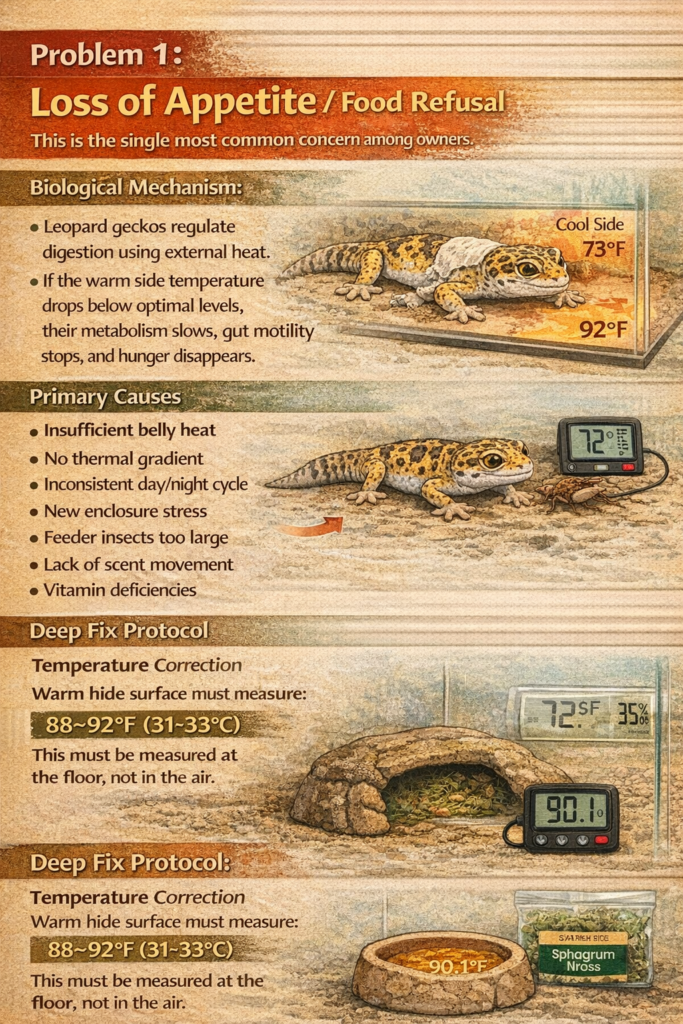
This is the single most common concern among owners.
Biological Mechanism
Leopard geckos regulate digestion using external heat.
If the warm side temperature drops below optimal levels, their metabolism slows, gut motility stops, and hunger disappears.
Primary Causes
• Insufficient belly heat
• No thermal gradient
• Inconsistent day/night cycle
• New enclosure stress
• Feeder insects too large
• Lack of scent movement
• Vitamin deficiencies
Deep Fix Protocol
Temperature Correction
Warm hide surface must measure:
88–92°F (31–33°C)
This must be measured at the floor, not in the air.
👉 Digital probe thermometer (critical accuracy tool)
Feeder Reset
Switch to:
• smaller prey
• active insects (movement triggers feeding reflex)
• gut-loaded feeders
👉 Live Dubia Roaches Starter Kit
Supplementation Reset
Calcium bowl inside enclosure
Plus dusting schedule:
• Calcium (no D3): every feeding
• Calcium + D3: 1–2x weekly
• Multivitamin: once weekly
👉 Zoo Med Repti Calcium with D3
👉 Repashy SuperVite Multivitamin
PROBLEM 2: Leopard Gecko Stuck Shed (Dysecdysis)
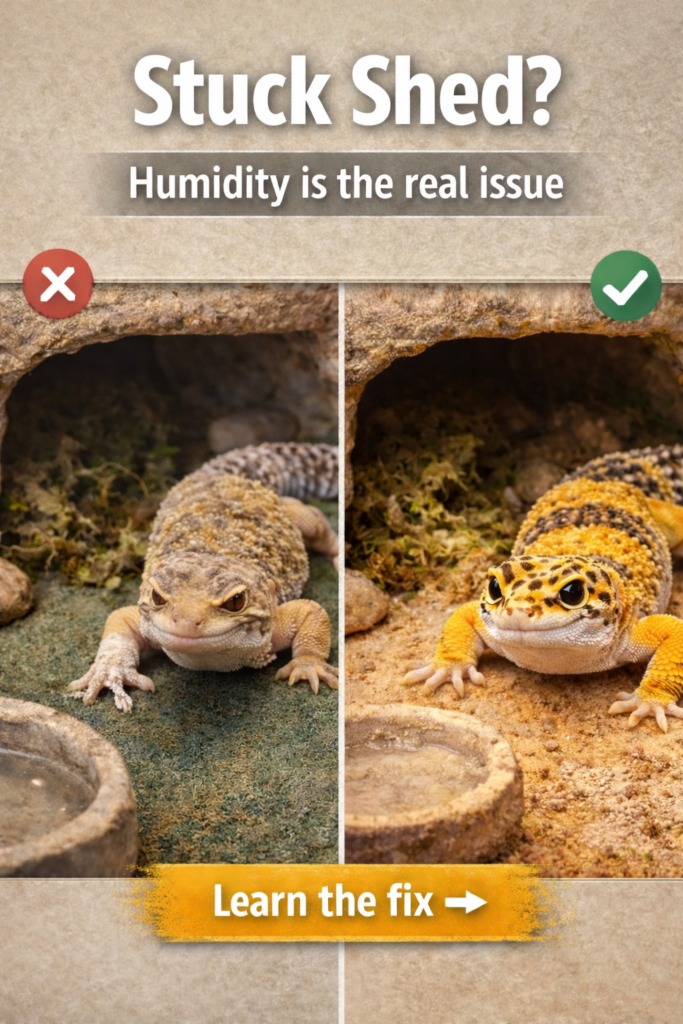
Shedding problems are early warning signs of dehydration and improper microclimate.
Biological Mechanism
Leopard geckos shed in layers.
Their skin separates using internal hydration + ambient humidity pockets.
If either is missing → skin sticks.
Common Failure Points
• No humid hide
• Low water intake
• Excess dry airflow
• Incomplete shedding cycle
Permanent Fix
Every enclosure must contain a humid microclimate zone.
This mimics their natural burrows.
Ideal humid hide conditions:
• 70–80% internal humidity
• Warm location
• Enclosed on 3 sides
• Damp but not wet
👉 Zilla Rock Lair
👉 Zoo Med Sphagnum Moss
PROBLEM 3: Leopard Gecko Lethargy / Always Hiding
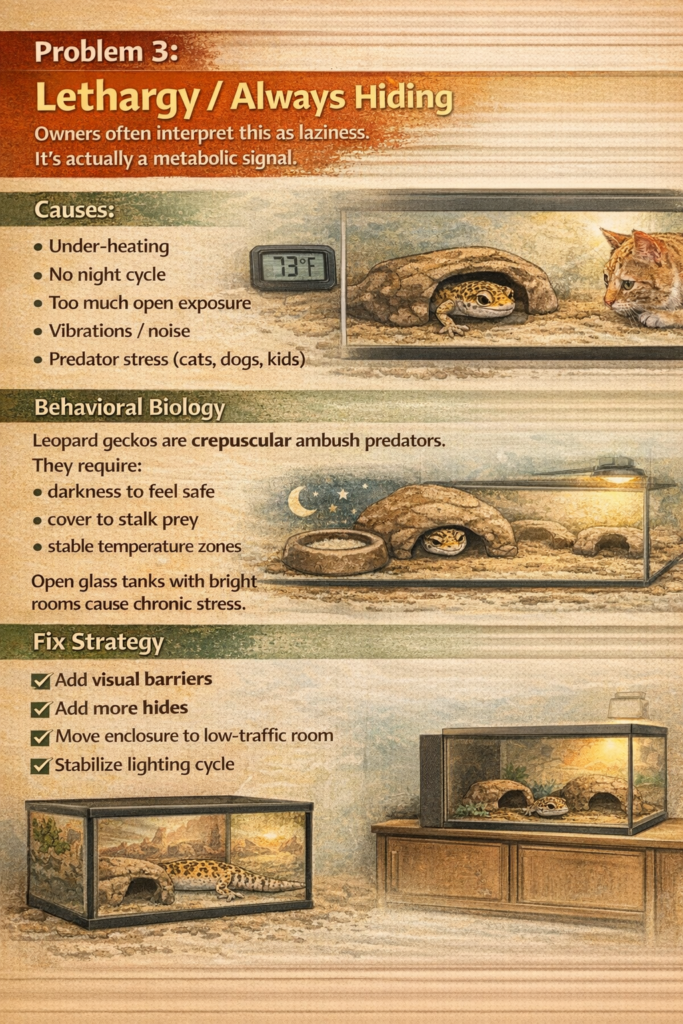
Owners often interpret this as laziness.
It’s actually a metabolic signal.
Causes
• Under-heating
• No night cycle
• Too much open exposure
• Vibrations / noise
• Predator stress (cats, dogs, kids)
Behavioral Biology
Leopard geckos are crepuscular ambush predators.
They require:
• darkness to feel safe
• cover to stalk prey
• stable temperature zones
Open glass tanks with bright rooms cause chronic stress.
Fix Strategy
- Add visual barriers
- Add more hides
- Move enclosure to low-traffic room
- Stabilize lighting cycle
👉 Under Tank Heater + Thermostat combo
👉 Inkbird Digital Thermostat Controller
PROBLEM 4: Leopard Gecko Thin Tail (Energy Reserve Failure)
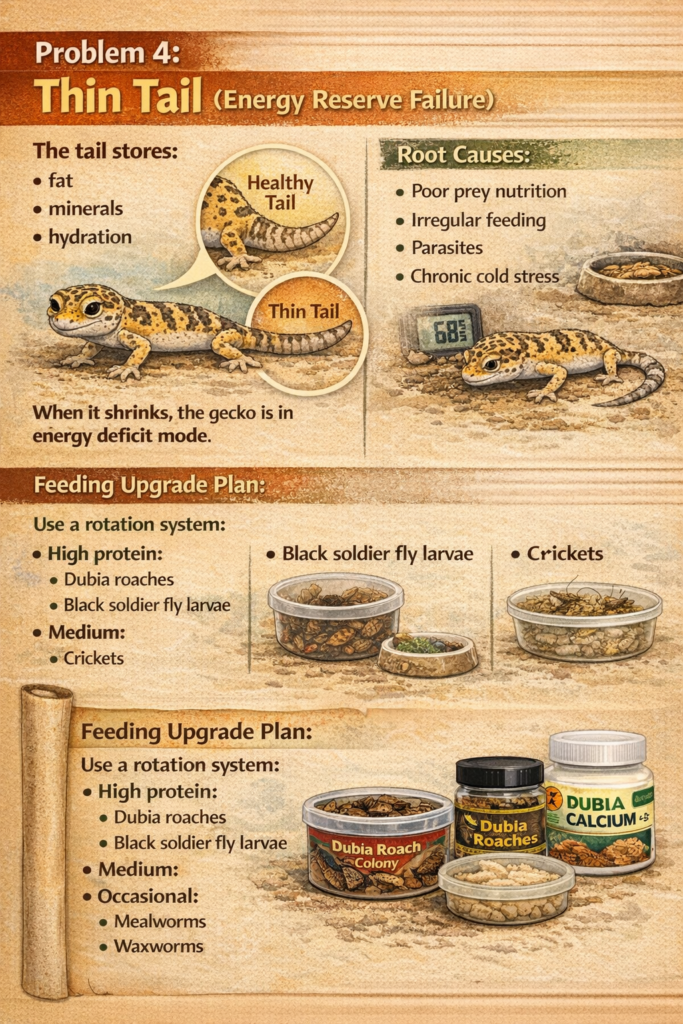
The tail stores:
• fat
• minerals
• hydration
When it shrinks, the gecko is in energy deficit mode.
Root Causes
• Poor prey nutrition
• Irregular feeding
• Parasites
• Chronic cold stress
Feeding Upgrade Plan
Use a rotation system:
High protein:
• Dubia roaches
• Black soldier fly larvae
Medium:
• Crickets
Occasional:
• Mealworms
• Waxworms
👉 Dubia Roach Colony Kit
👉 Black Soldier Fly Larvae
PROBLEM 5: Leopard Gecko Metabolic Bone Disease (MBD)
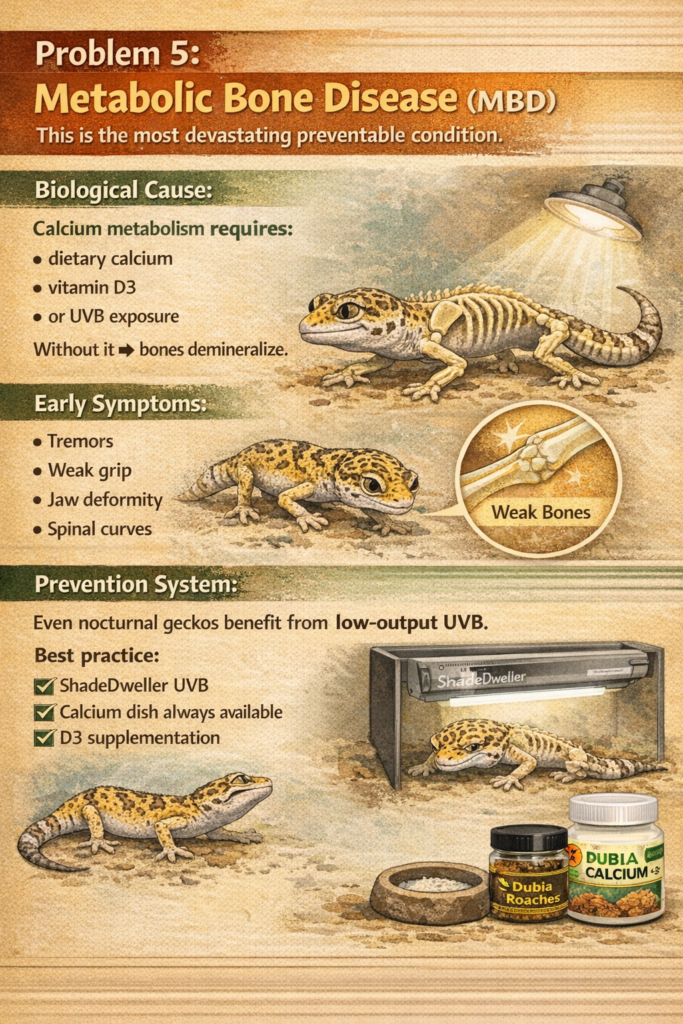
This is the most devastating preventable condition.
Biological Cause
Calcium metabolism requires:
• dietary calcium
• vitamin D3
• or UVB exposure
Without it → bones demineralize.
Early Symptoms
• Tremors
• Weak grip
• Jaw deformity
• Spinal curves
Prevention System
Even nocturnal geckos benefit from low-output UVB.
Best practice:
• ShadeDweller UVB
• Calcium dish always available
• D3 supplementation
👉 Arcadia ShadeDweller UVB Kit
👉 Exo Terra Calcium Dish
PROBLEM 6: Leopard Gecko Dirty Tank & Odor
Odor means:
• bacteria
• mold
• ammonia
Substrate Science
Beginner-safe:
• Paper towel
• Reptile liner
Advanced:
• Bioactive soil mix
Loose sand causes:
• impaction
• bacterial blooms
👉 Zilla Reptile Liner
👉 Bio Dude Terra Sahara (advanced)
PROBLEM 7: Leopard Gecko Stress Behaviors (Glass Surfing, Biting, Freezing)
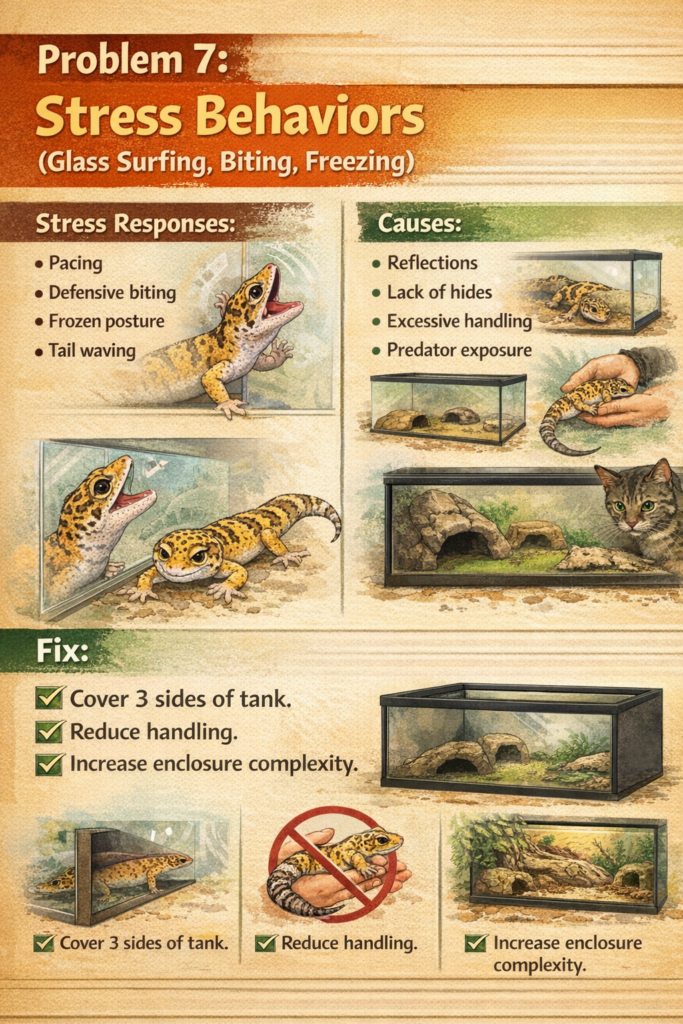
Stress responses:
• pacing
• defensive biting
• frozen posture
• tail waving
Causes
• reflections
• lack of hides
• excessive handling
• predator exposure
Fix
Cover 3 sides of tank.
Reduce handling.
Increase enclosure complexity.
Owner Master Checklist (Authority Section)
Daily:
• Check temps
• Spot clean
• Observe behavior
Weekly:
• Dust feeders
• Moss rehydrate
• Weigh gecko
Monthly:
• Deep clean
• Replace substrate
• Inspect toes & tail
The Real Truth About Leopard Gecko Health
Leopard geckos are environmental animals.
They don’t need:
• constant vet visits
• medications
• special treatments
They need:
• correct heat
• correct humidity
• correct nutrition
• correct stress levels
When those are right, they thrive for 15–20 years.