
Average Cat Lifespan, Indoor vs Outdoor Cats, and What Affects Longevity
One of the most common questions cat owners ask is:
How long do cats live?
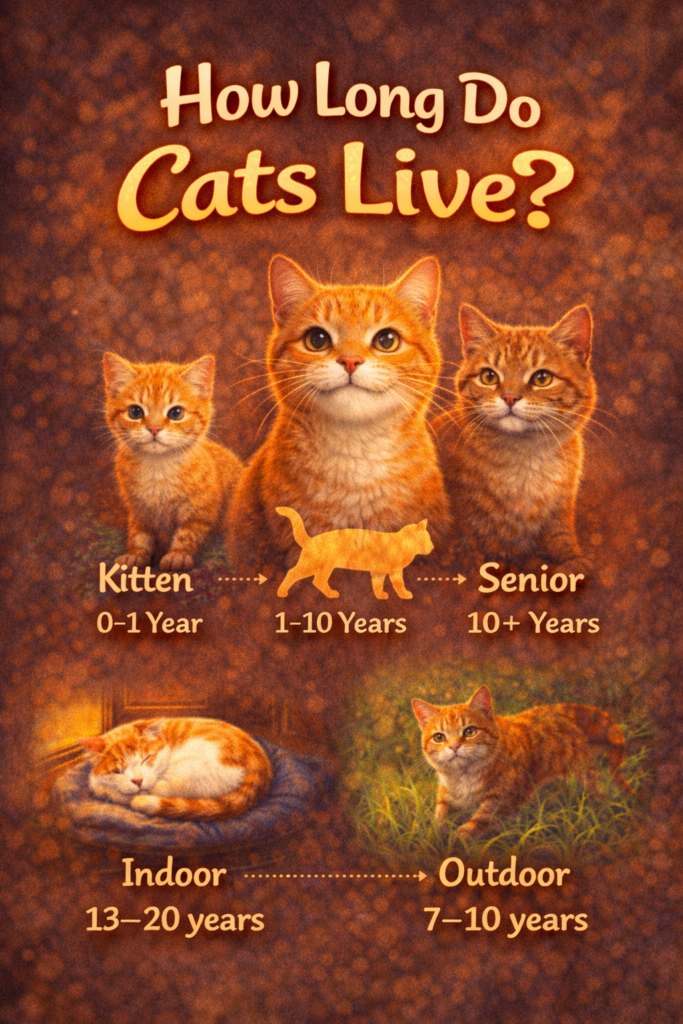
While there’s no single answer that applies to every cat, most indoor cats live between 13 and 20 years, and many reach their late teens or early twenties with proper care. A cat’s lifespan is influenced by several key factors, including indoor vs outdoor lifestyle, breed, genetics, healthcare, diet, and environment.
In this guide, we’ll explore:
- The average lifespan of cats
- How indoor and outdoor lifestyles affect longevity
- Breed-related lifespan differences
- What shortens or extends a cat’s life
- How to help your cat live a longer, healthier life
Average Lifespan of Cats
How Long Do Cats Live on Average?
- Indoor cats: 13–20 years
- Outdoor cats: 2–7 years (on average)
- Indoor–outdoor cats: 5–10 years
Some cats live well beyond the average:
- Cats living 20+ years are not uncommon
- The oldest recorded cat lived to 38 years
Longevity depends less on luck and more on environment and care.
Indoor Cats vs Outdoor Cats: A Huge Difference
Why Indoor Cats Live Longer 🏡
Indoor cats are protected from many life-threatening risks, including:
- Traffic accidents
- Predators
- Extreme weather
- Poisoning
- Infectious diseases
- Parasites
Because of this, indoor cats often live two to three times longer than outdoor cats.
Risks That Shorten Outdoor Cat Lifespan
Outdoor cats face daily dangers such as:
- Cars and machinery
- Fights with other animals
- Exposure to diseases (FIV, FeLV)
- Parasites (fleas, ticks, worms)
- Toxins and pesticides
- Human cruelty or accidents
Even experienced outdoor cats are vulnerable to unpredictable risks.
Does Breed Affect How Long Cats Live?
Yes — breed and genetics can influence lifespan, though lifestyle and healthcare still matter more.
Long-Lived Cat Breeds
Some breeds known for longer lifespans include:
- Siamese
- Burmese
- Balinese
- Russian Blue
- American Shorthair
These cats often live 15–20 years or more with good care.
Breeds With Shorter Average Lifespans
Certain breeds may have shorter lifespans due to genetic conditions, including:
- Maine Coon (heart disease risk)
- Persian (respiratory and kidney issues)
- Scottish Fold (joint and cartilage problems)
That said, many individual cats from these breeds still live long, healthy lives with proper veterinary care.
Factors That Affect a Cat’s Lifespan
1. Veterinary Care 🩺
Regular veterinary care is one of the biggest predictors of longevity.
This includes:
- Annual checkups
- Vaccinations
- Dental care
- Parasite prevention
- Early disease detection
Cats often hide illness, so routine exams are crucial.
2. Diet and Nutrition 🍽️
A balanced, species-appropriate diet supports:
- Immune function
- Organ health
- Muscle maintenance
- Weight control
Obesity is one of the most common lifespan-shortening issues in cats, increasing the risk of:
- Diabetes
- Arthritis
- Heart disease
3. Spaying and Neutering
Spayed and neutered cats generally live longer because:
- Reduced risk of certain cancers
- Less roaming and fighting
- Lower stress levels
Neutered cats are also less likely to engage in risky behaviors.
4. Mental and Physical Enrichment
Cats that receive regular stimulation tend to:
- Maintain mobility longer
- Show fewer stress-related illnesses
- Have better cognitive health in old age
Enrichment includes:
- Interactive play
- Scratching posts
- Climbing areas
- Puzzle feeders
- Window views
5. Stress and Environment
Chronic stress can negatively impact a cat’s immune system.
Stressors include:
- Frequent changes in environment
- Conflict with other pets
- Lack of safe spaces
- Loud or chaotic households
A calm, predictable environment supports longevity.
How Long Do Kittens Live Compared to Adult Cats?
Kittens are fragile early in life, but once they reach adulthood, their lifespan depends heavily on:
- Healthcare
- Nutrition
- Safety
Cats that survive their first year and live indoors often go on to live long lives.
Senior Cats: What Is Considered “Old”?
Cats are generally considered:
- Senior: 10–14 years
- Geriatric: 15+ years
Senior cats may need:
- More frequent vet visits
- Dietary adjustments
- Joint support
- Dental care
With proper care, senior cats can still enjoy many healthy, happy years.
Signs Your Cat Is Aging Normally
Normal aging may include:
- Sleeping more
- Slightly reduced activity
- Minor vision or hearing changes
However, aging should not include:
- Sudden weight loss
- Chronic pain
- Severe lethargy
- Behavior changes
These may signal treatable medical issues.
How to Help Your Cat Live a Longer Life
Here are practical steps to maximize lifespan:
- Keep cats indoors or supervised outdoors
- Feed a high-quality, age-appropriate diet
- Maintain regular veterinary care
- Keep vaccinations and parasite prevention current
- Encourage daily play and movement
- Manage weight carefully
- Provide safe, low-stress environments
- Address health changes early
Small, consistent choices make a big difference over time.
Final Answer: How Long Do Cats Live?
Most indoor cats live between 13 and 20 years, and many exceed that range with proper care. A cat’s lifespan is influenced by lifestyle, healthcare, diet, breed, and environment, with indoor living and preventive care playing the largest roles.
By prioritizing safety, health, and enrichment, cat owners can significantly increase both the length and quality of their cat’s life.