
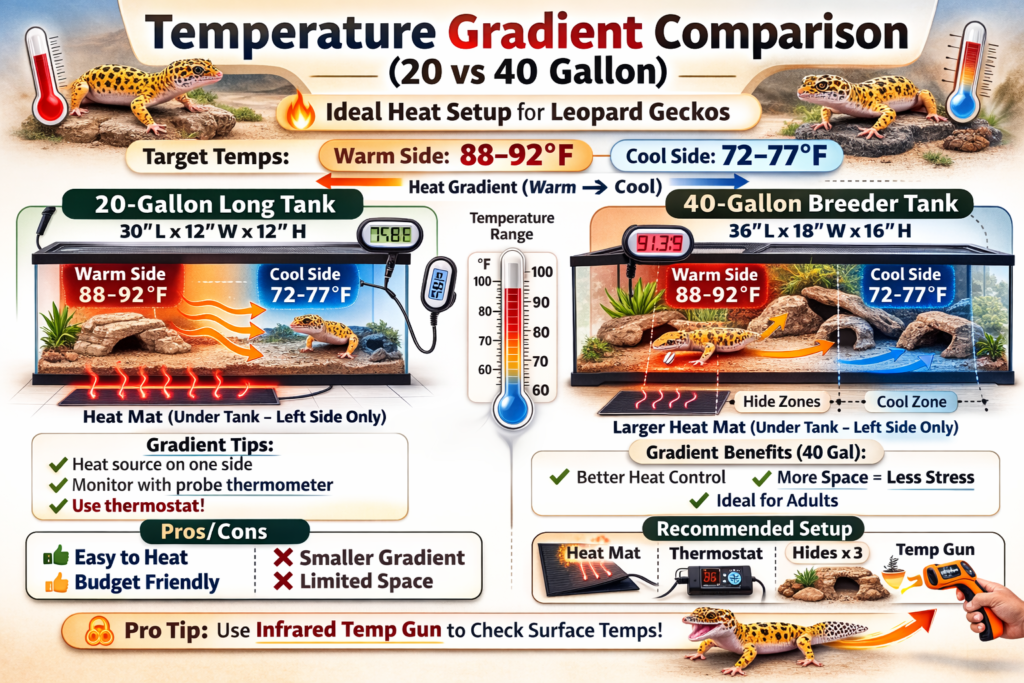
If your leopard gecko isn’t eating, seems sluggish, or struggles with shedding…
Heating is almost always the issue. Check this Leopard Gecko Heating Setup Guide
Leopard geckos rely on belly heat to digest food properly. Without the correct temperature gradient, digestion slows, stress increases, and long-term health problems can develop.
This guide gives you:
- ✅ Exact temperature numbers
- ✅ Proper layout placement
- ✅ Best equipment picks
- ✅ Troubleshooting advice
- ✅ Internal links to Main Leopard Gecko Care Hub
For complete care, feeding, tank size, and health guides:
👉 Visit the Leopard Gecko Care Hub
Disclosure: This post contains affiliate links. As an Amazon Associate, I earn from qualifying purchases at no extra cost to you.
Quick Reference Heating Chart (Best Picks)
| Product | What It Does | View on Amazon |
|---|---|---|
| Under Tank Heat Mat (Small – 20G) | Provides belly heat | 👉 Check Price on Amazon |
| Under Tank Heat Mat (Large – 40G) | Proper coverage for breeder tanks | 👉 Check Price on Amazon |
| Digital Thermostat | Prevents overheating | 👉 Check Price on Amazon |
| Digital Thermometer w/ Probe | Measures warm side floor temp | 👉 Check Price on Amazon |
| Infrared Temp Gun | Checks exact surface temps | 👉 Check Price on Amazon |
| Hygrometer Combo Unit | Monitors humidity | 👉 Check Price on Amazon |
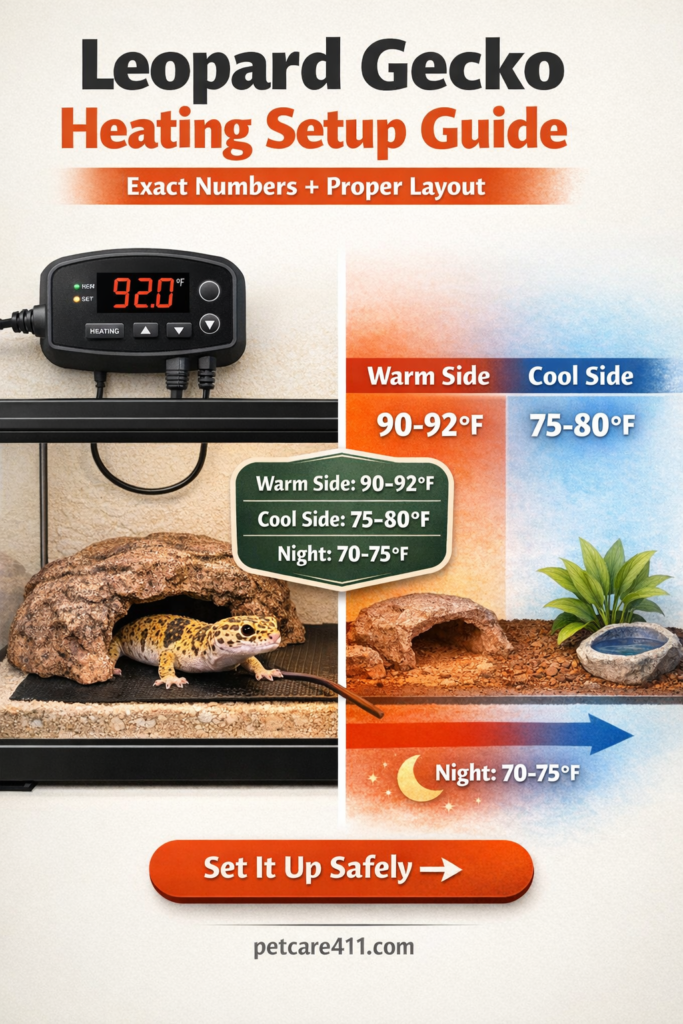
Leopard Gecko Heating Setup Guide (Exact Numbers + Layout)
Leopard geckos originate from arid, rocky regions like:
- Pakistan
- Afghanistan
- India
They absorb heat from the ground — not from overhead basking bulbs like bearded dragons.
That means:
Belly heat is essential.
Exact Temperature Targets (Non-Negotiable)
Warm Side Floor:
90–92°F
Cool Side:
75–80°F
Night Drop:
70–75°F is safe
Anything below 85°F on the warm side can slow digestion.
Anything above 95°F risks burns.
Proper Heat Mat Layout (Correct Placement)
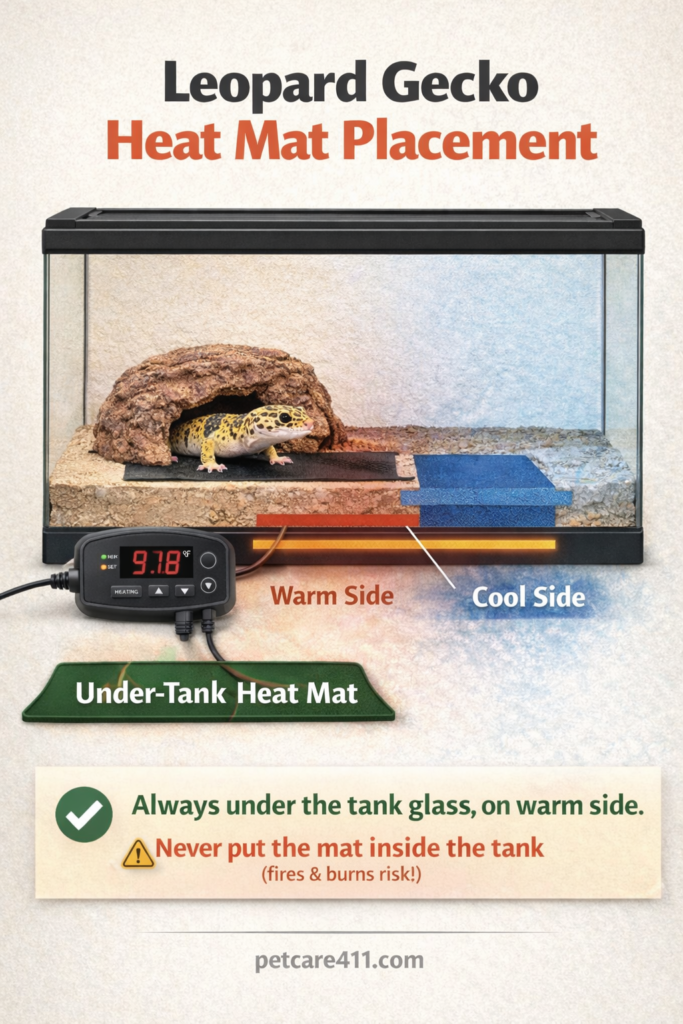
Correct Setup:
- Heat mat goes under one side only
- Never cover the entire tank bottom
- Warm hide sits directly above heat mat
- Cool hide sits on opposite end
- Temperature probe placed inside warm hide on floor surface
This creates a natural gradient:
Warm → Transition → Cool
Why a Thermostat Is Mandatory
Never plug a heat mat directly into the wall.
Heat mats can exceed 110°F without regulation.
👉 Digital Thermostat – Check Price
A thermostat:
- Maintains consistent heat
- Prevents overheating
- Extends mat lifespan
- Protects your gecko
Skipping this is the #1 beginner mistake.
If your gecko won’t eat, check heating first:
👉 Why Is My Leopard Gecko Not Eating?
Measuring Heat Correctly (Most People Do This Wrong)
Air thermometers ≠ surface temperature.
Leopard geckos digest using surface warmth.
You need:
- Probe thermometer on warm side floor
- Infrared temp gun for quick checks
👉 Digital Thermometer w/ Probe – Check Price
👉 Infrared Temp Gun – Check Price
Test directly where your gecko’s belly rests.
Heating Differences: 20 vs 40 Gallon
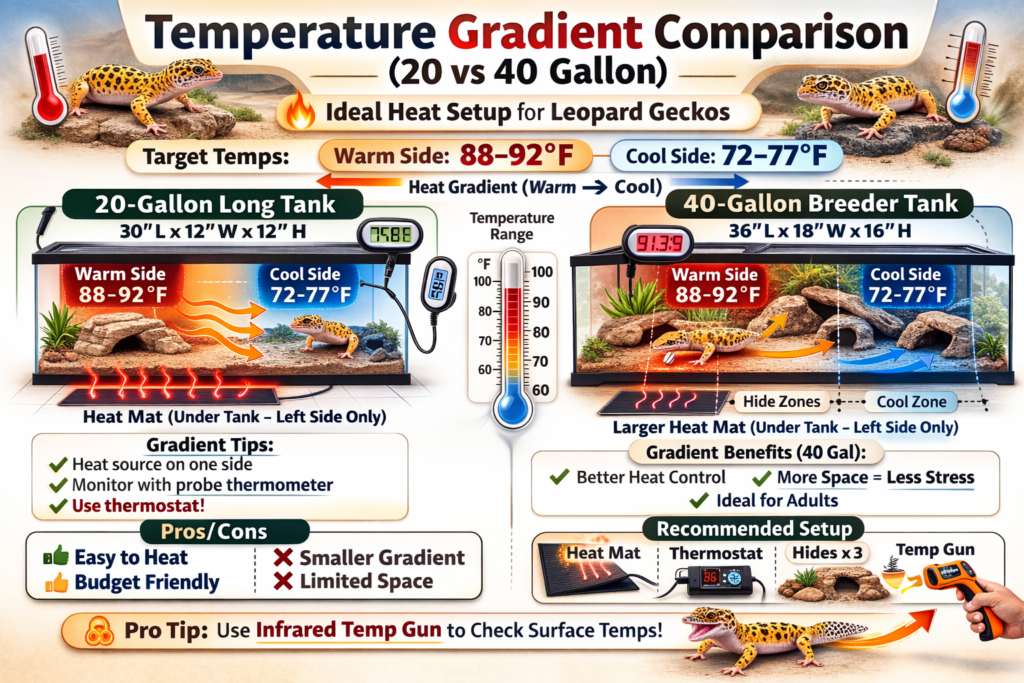
In a 20-gallon long:
- Heat spreads faster
- Gradient is smaller
- Easier to overheat
In a 40-gallon breeder:
- Better separation
- More stable cool zone
- More natural gradient
For full tank comparison:
👉 Leopard Gecko Tank Size Guide (20 vs 40)
Humidity & Heating Balance
Leopard geckos prefer:
30–40% humidity
Too humid:
- Respiratory risk
Too dry:
- Stuck shed
Use a humid hide instead of raising full tank humidity.
👉 Hygrometer Combo – Check Price
For shedding help:
👉 Leopard Gecko Shedding Guide
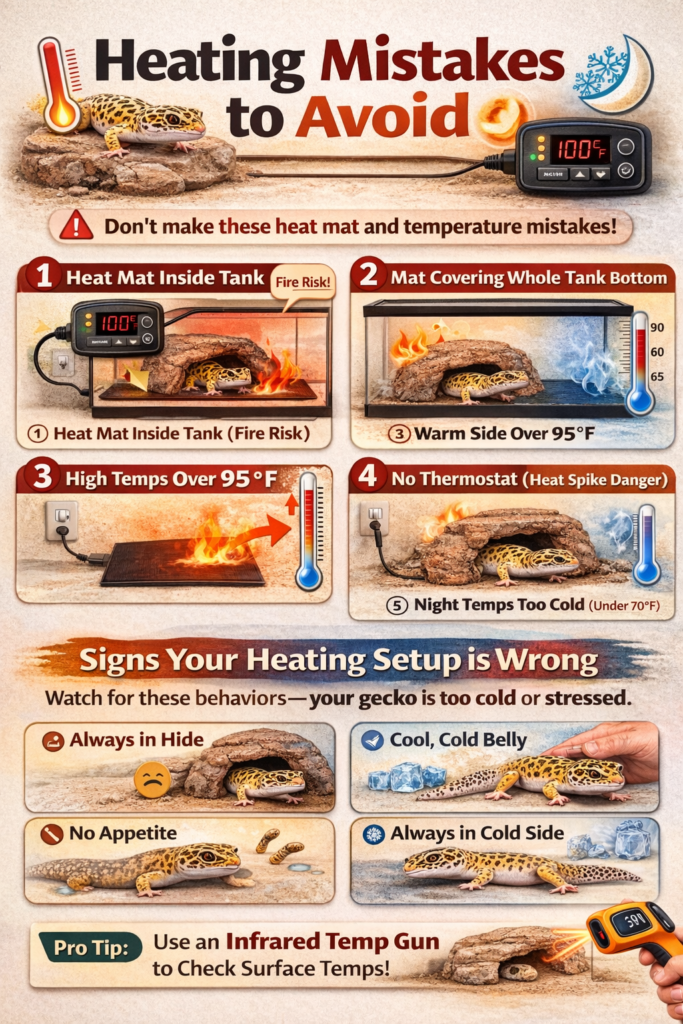
Heating Mistakes to Avoid
- Using heat rocks (burn risk)
- Covering entire tank bottom with heat mat
- No thermostat
- Guessing temperatures
- Relying on analog thermometers
- Using red night bulbs
Heat rocks are especially dangerous because they create localized hot spots.
Signs Your Heating Setup Is Wrong
- Refusing food
- Staying only in one corner
- Constant hiding
- Loose stool
- Stuck shed
- Lethargy
Heating impacts digestion first — then everything else.
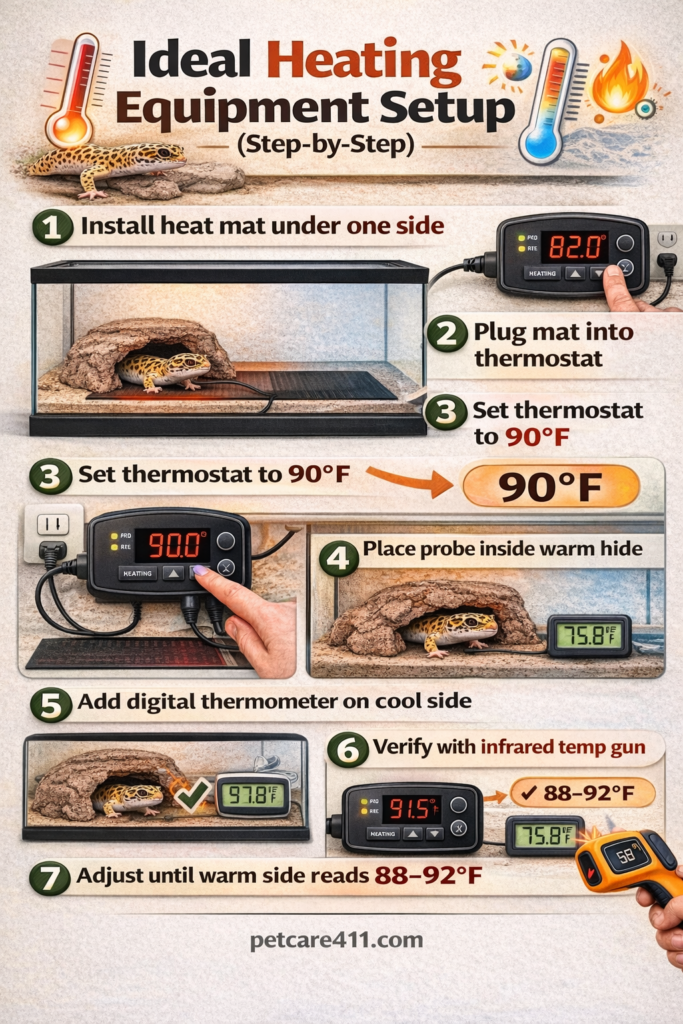
Ideal Heating Equipment Setup (Step-by-Step)
1️⃣ Install heat mat under one side
2️⃣ Plug mat into thermostat
3️⃣ Set thermostat to 90°F
4️⃣ Place probe inside warm hide
5️⃣ Add digital thermometer on cool side
6️⃣ Verify with infrared temp gun
7️⃣ Adjust until warm side reads 88–92°F
Simple. Controlled. Safe.
Final Heating Summary
If you provide:
- Controlled belly heat
- Proper gradient
- Thermostat regulation
- Accurate measurement tools
Your leopard gecko will:
- Digest properly
- Eat consistently
- Shed cleanly
- Stay active
Heating is the foundation of leopard gecko health.
For full setup, feeding, tank size, supplementation, and troubleshooting: