
If your dog’s back legs are weak (IVDD recovery, arthritis/hip dysplasia, degenerative myelopathy, post-op healing, ACL/TPLO rehab, etc.), a rear-support wheelchair can restore safe movement, reduce frustration, and keep muscle tone longer—but only if it fits correctly.
Below are 5 of the best rear-leg dog wheelchairs, with an emphasis on higher-end options (stronger frames, better saddles/harnessing, more adjustability, better long-term comfort).
“Disclosure: This post may contain affiliate links. If you buy through my links, I may earn a commission at no extra cost to you
Top Dog Wheelchairs for Back Legs – Link & Benefit Chart
| Product (Click to Shop) | Key Benefit / Best For | Check Price on Amazon |
|---|---|---|
| Walkin’ Wheels Med/Large Dog Wheelchair | 🐶 Best overall premium mobility — Highly adjustable heavy-duty frame; popular for medium–large dogs with hind-leg weakness or paralysis. | 👉 Check price on Amazon |
| Walkin’ Wheels Small Dog Wheelchair | 🐾 Top small-breed choice — Adjustable for tiny pups needing rear support (great comfort & control). | 👉 Check price on Amazon |
| VEVOR 2 Wheels Dog Wheelchair | 💸 Best budget-friendly basic — Adjustable 2-wheel cart; durable frame with shock-absorbing wheels for everyday walks. | 👉 Check price on Amazon |
| VEVOR Adjustable Dog Wheelchair | 🐕 Affordable adjustable alternative — Multi-position adjustability and lightweight frame, good intro-level choice. | 👉 Check price on Amazon |
| Best Friend Mobility Dog Wheelchair | 🌲 All-terrain option — Pneumatic wheels and padded support for outdoor walks or rehabilitation. | 👉 Check price on Amazon |
| Animal Ortho Care Dog Wheelchair | 🛠️ Great mid-tier pick — Adjustable and supportive; ideal for dogs recovering from injury or age-related weakness. | 👉 Check price on Amazon |
| K9 Carts Dog Wheelchair | 🐾 Sturdy, premium build — Durable frame and quality hardware for daily use and heavier dogs. | 👉 Check price on Amazon |
Quick “which one should I buy?” guide
Choose a premium cart if you want:
- Daily use + durability (aluminum frames, better hardware)
- Precise adjustability (height/length/width) for a correct fit
- Better support around the pelvis/groin (less rubbing)
- Rehab-friendly features (stirrups for knuckling/dragging, balance tuning)
You’ll need measurements. Most brands use:
- Rear leg height (with a natural bend—don’t stretch the leg)
- Armpit-to-rump (ATR) length (often required for smaller dogs)
Best Friend Mobility also provides a dedicated sizing guide and measuring help.
1) Eddie’s Wheels (custom-built premium) — best custom fit & long-term comfort
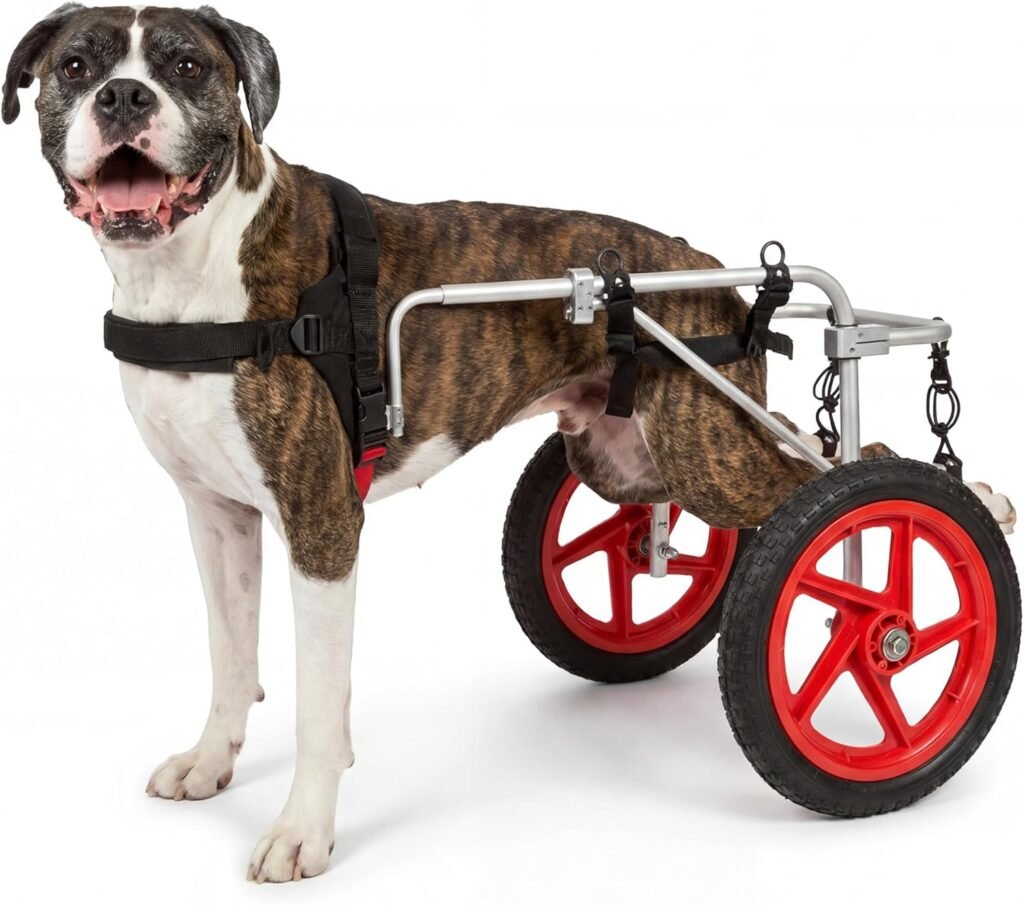
Why it’s top-tier: Eddie’s Wheels is known for custom-built carts (not a one-size kit), with a design focus on support and comfort—great for dogs that don’t fit “standard” proportions or need a more tailored saddle. They list rear-leg wheelchairs with a starting price range roughly $500–$900 depending on configuration.
Best for
- Dogs with unusual proportions (long backs, barrel chests, broad hips)
- Dogs prone to rubbing/chafing in “universal” harnesses
- Long-term mobility needs (DM, chronic orthopedic issues)
- Owners who want a “buy once, buy right” cart
Standout features
- Custom-built to your measurements
- Options like stirrups for knuckling/dragging (useful for neuro deficits)
- Adjustable for height/length
Potential downsides
- Higher cost
- Build/ship time can be longer than mass-produced carts
- You’ll want accurate measurements (and sometimes photos) for best results
2) K9 Carts Rear Wheelchair — premium build + stability for bigger dogs
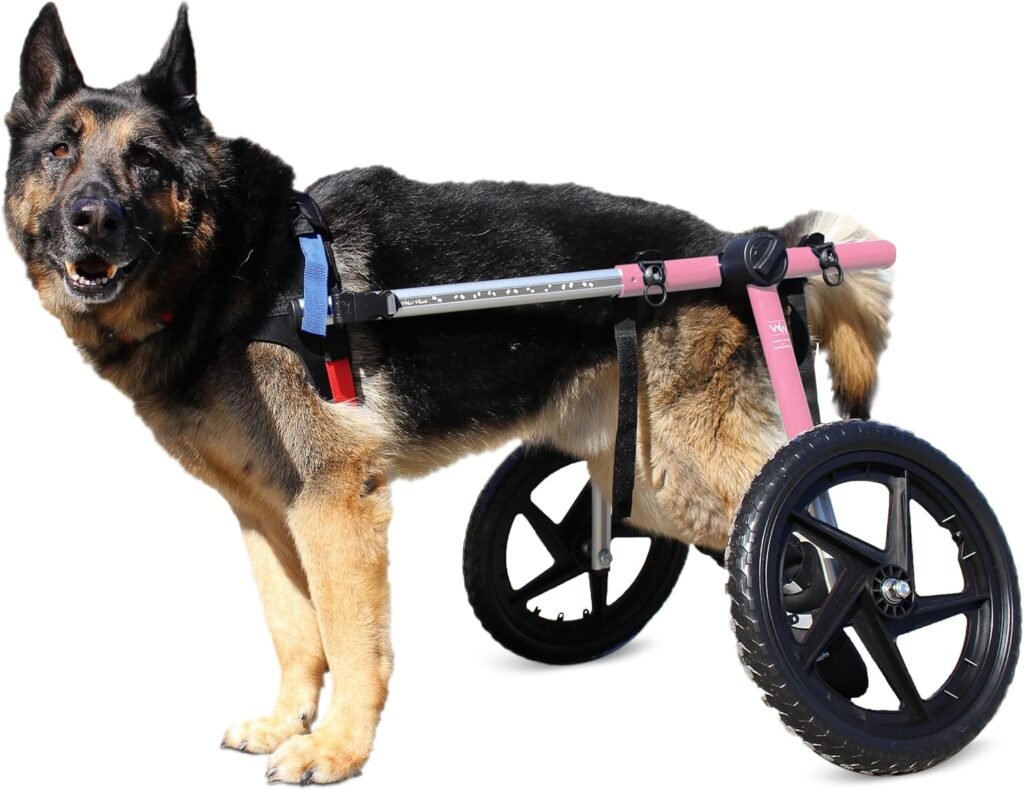
K9 Carts is a long-running mobility brand with a rear wheelchair line and more complex solutions. Their rear wheelchair pricing commonly lands in the upper tier (around the $579–$619 range shown on their product listing).
Best for
- Medium-to-large dogs needing a sturdy daily-use cart
- Dogs that need a bit more stability and “dialed-in” balance
What to look for
- Rear support fit + wheel placement that keeps the cart balanced
- Harness comfort around hips/groin (this matters more than people expect)
Upgrade note
If your dog also needs help up front (weak front legs, poor endurance), K9 Carts also sells full-support options (listed around $925 on their product page).
3) Walkin’ Wheels Rear Dog Wheelchair — best “adjustable premium” for most dogs
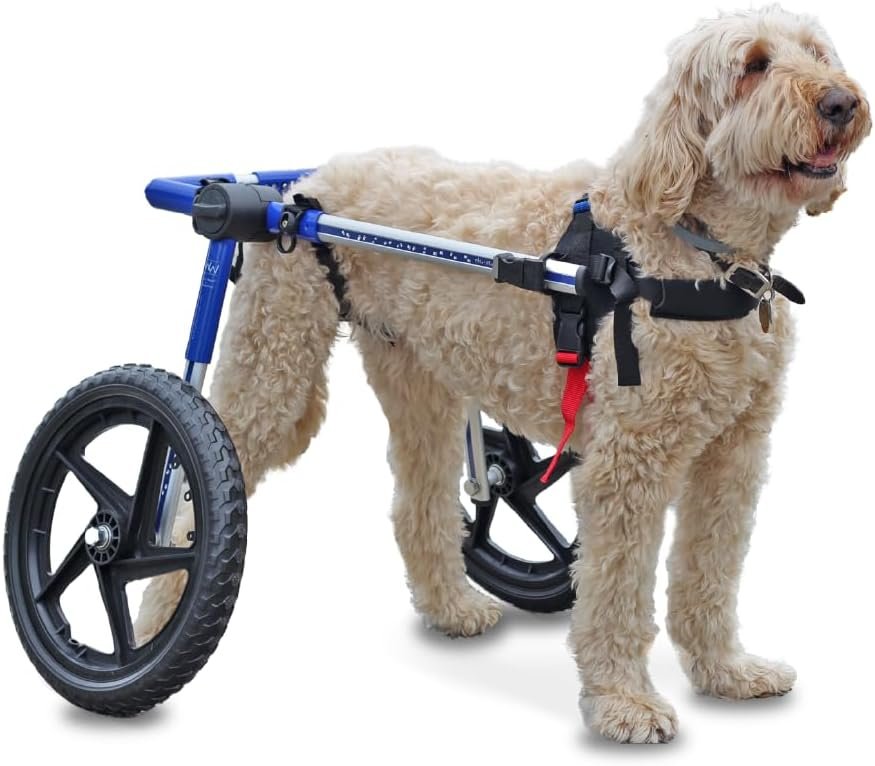
Walkin’ Wheels is popular because it’s highly adjustable and widely supported with sizing tools. Their rear wheelchairs (example listing) show pricing around $499 with strong review volume.
Best for
- First-time wheelchair buyers who want adjustability + proven fit system
- Dogs that are expected to change (weight changes, rehab progression)
Standout features
- Adjustable height/length/width for a custom-ish fit
- “SureFit” sizing guidance (rear leg height + ATR length for smaller dogs)
Potential downsides
- Because it’s a modular adjustable system, you may need a little fine-tuning time to perfect fit.
4) Best Friend Mobility SitGo (rear support) — best for dogs that need sit/stand convenience
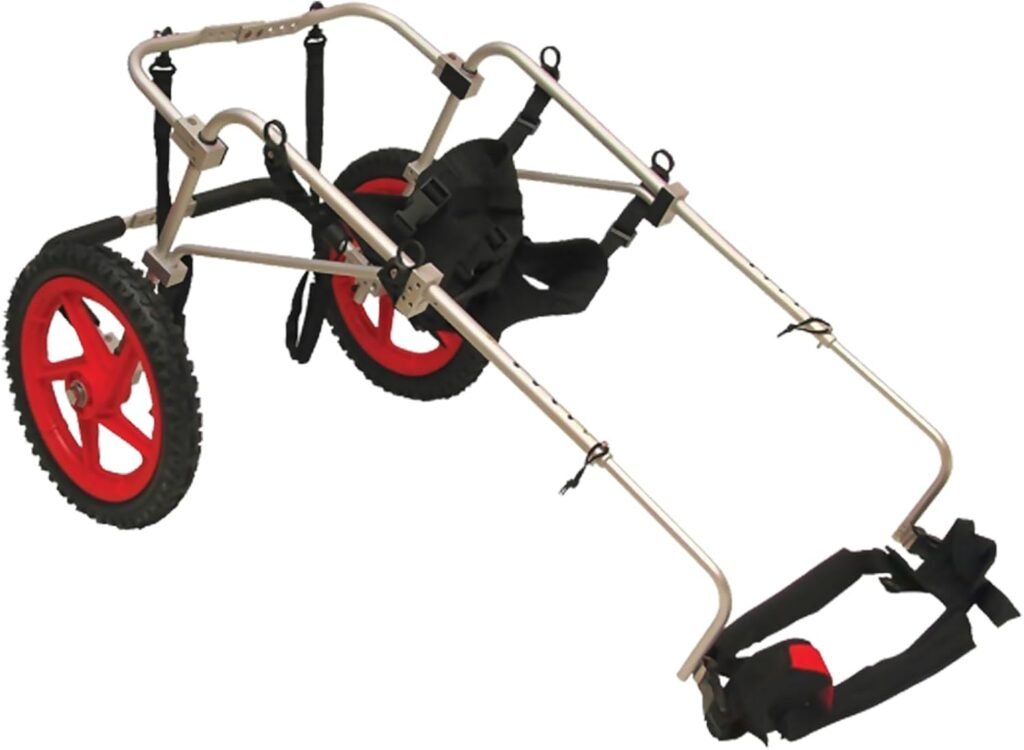
The SitGo line is designed around easier transitions (the brand markets sit/stand convenience and ease of adjustment).
Pricing varies by size; an example listing shows $349 for a size option.
Best for
- Dogs that fatigue quickly and benefit from easier position changes
- Owners who want easier adjustability and a supportive harness system
Standout features
- Adjustable frame, designed for rear-leg support and comfort
- Brand provides a measurement/sizing guide
Potential downsides
- Like all carts: fit matters—expect some adjustments the first week.
5) Animal Ortho Care “Haute Wheels” — great mid-premium alternative
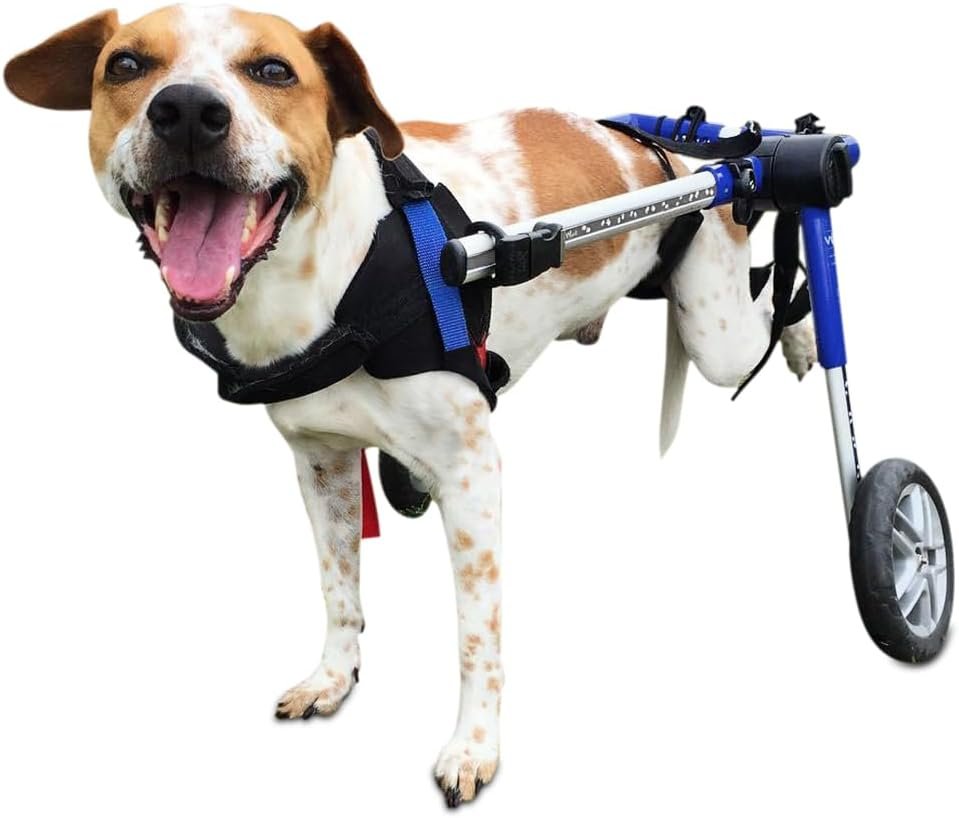
Animal Ortho Care’s wheelchair (often marketed as “Haute Wheels”) is a solid contender when you want quality but not necessarily a fully custom build. Their listing includes a clear “how to measure” section, which is a good sign for fit-focused products.
Best for
- Owners who want a reputable mid-premium cart and clear measuring guidance
- Dogs that do well with standard sizing + adjustments
Potential downsides
- Not as tailored as a full custom cart for tricky body shapes
How to get the fit right (this is what prevents rubbing and “I hate this thing” reactions)
1) Measure the right way
- Rear leg height: measure to the toe pad with the leg naturally bent (don’t pull it straight).
- Armpit-to-rump (ATR) length: many brands require this for smaller dogs.
2) First 7 days: short sessions win
Start with 5–10 minutes 1–2x/day on smooth ground. Add time gradually. Most dogs adapt faster if you keep it positive and short.
3) Check these “fit signals”
Good fit looks like:
- Pelvis supported without pinching
- No rubbing in the groin
- Wheels track straight; cart doesn’t tip or drift
- Dog can move freely with front legs without being pulled upward or backward
If you see scuffs, hesitation, or the cart “lifting” your dog oddly, adjust height/length or harness points (or contact the brand’s support team—many are helpful with photos).
“Disclosure: This post may contain affiliate links. If you buy through my links, I may earn a commission at no extra cost to you.”