
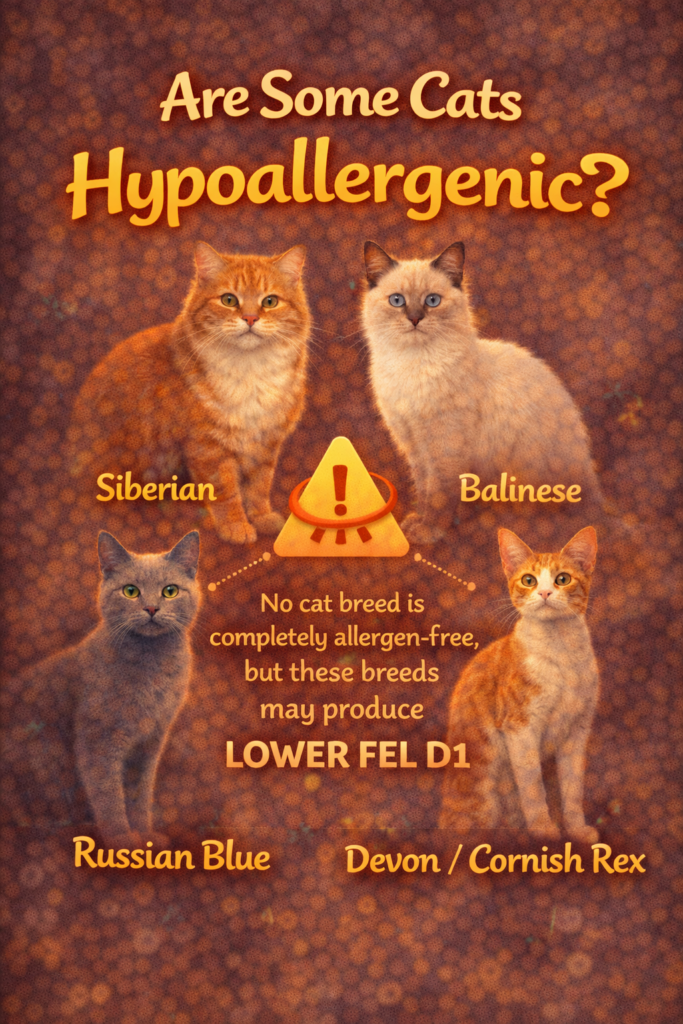
What “Hypoallergenic Cats” Really Mean and Which Breeds May Be Better for Allergy Sufferers
If you love cats but struggle with sneezing, itchy eyes, or congestion around them, you’ve probably asked:
Are there hypoallergenic cats?
The short answer is no cat breed is 100% hypoallergenic. However, some cats may trigger fewer allergy symptoms because they tend to produce lower levels of the primary cat allergen, Fel d 1.
Understanding how cat allergies work—and which breeds may be more allergy-friendly—can help allergy sufferers make informed decisions before bringing a cat home.
In this article, we’ll explain:
- What causes cat allergies
- What “hypoallergenic” actually means
- Which cat breeds may produce fewer allergens
- Why no cat is completely allergen-free
- Practical tips for living with cats if you have allergies
What Causes Cat Allergies?
Contrary to popular belief, cat allergies are not caused by fur.
The main culprit is a protein called Fel d 1, which is found in:
- Cat saliva
- Skin oils (sebum)
- Dander (dead skin flakes)
When cats groom themselves, saliva containing Fel d 1 spreads onto their fur. As the fur sheds, microscopic allergen particles become airborne and settle on furniture, clothing, and surfaces.
This is why even hairless cats can trigger allergies.
What Does “Hypoallergenic” Mean?
The term hypoallergenic does not mean allergen-free.
It means:
- Less likely to cause an allergic reaction
- Produces lower levels of allergens, not zero
With cats, hypoallergenic typically refers to breeds that:
- Produce less Fel d 1
- Shed less dander
- Have fur or skin types that spread allergens less efficiently
Allergy severity varies from person to person, so reactions differ widely.
Why No Cat Is Completely Hypoallergenic
Every cat:
- Produces Fel d 1
- Grooms itself
- Sheds skin cells
Even cats marketed as “hypoallergenic” still produce allergens—just sometimes at lower levels.
Additionally:
- Individual cats of the same breed can produce different amounts of Fel d 1
- Male cats typically produce more allergens than females
- Unneutered males produce the highest levels
Because of these variables, there is no guaranteed allergy-safe cat.
Cat Breeds That May Produce Fewer Allergens
While not allergen-free, the following breeds are often reported to be more tolerable for some allergy sufferers.
1. Siberian
The Siberian is one of the most frequently cited “hypoallergenic” breeds.
Why they may help:
- Many Siberians naturally produce lower levels of Fel d 1
- Thick fur doesn’t necessarily mean more allergens
Some breeders even test individual Siberian cats for Fel d 1 levels.
2. Balinese
Often called the “long-haired Siamese,” the Balinese may surprise people.
Why they may help:
- Often produce less Fel d 1 than many other breeds
- Fine coat sheds less dander
Despite their long fur, many allergy sufferers report fewer reactions.
3. Russian Blue
Russian Blues are another breed frequently recommended for people with allergies.
Why they may help:
- Dense, plush coat traps dander
- Lower average Fel d 1 production
- Known for minimal shedding
They’re also quiet, gentle, and often bond closely with their owners.
4. Devon Rex and Cornish Rex
These two Rex breeds have very short, fine coats.
Why they may help:
- Shed less fur and dander
- Less surface area for allergens to spread
However, they still produce Fel d 1, and frequent grooming may be necessary to manage skin oils.
Do Hairless Cats Cause Fewer Allergies?
Hairless cats (like the Sphynx) are not allergy-free.
While they don’t shed fur:
- They still produce Fel d 1
- Skin oils build up and must be cleaned regularly
In some cases, allergy symptoms may actually worsen if allergens are spread directly from skin contact.
Factors That Affect Allergen Levels in Cats
Several factors influence how allergenic a cat may be:
- Sex: Males produce more Fel d 1 than females
- Neutering: Neutered cats produce fewer allergens
- Age: Kittens often produce fewer allergens
- Individual biology: Allergen levels vary cat to cat
This is why spending time with a specific cat before adoption is essential.
Tips for Living With Cats If You Have Allergies
If you’re allergic but still want to live with a cat, these strategies can help reduce symptoms:
1. Spend Time With the Cat Before Adopting
Visit the breeder or shelter multiple times to see how your body reacts.
2. Keep the Cat Out of the Bedroom
Reducing allergen exposure where you sleep can significantly improve symptoms.
3. Use HEPA Air Filters
High-quality air purifiers help remove airborne allergens.
4. Groom and Clean Regularly
- Brush cats frequently (preferably by a non-allergic person)
- Wipe cats with pet-safe grooming wipes
- Wash bedding and furniture covers often
5. Wash Hands After Handling
Avoid touching your face after petting your cat.
6. Consider Allergy Treatments
Antihistamines, nasal sprays, or allergy shots may help manage symptoms.
Are Hypoallergenic Cats Worth It?
For some allergy sufferers, yes.
While no cat is completely hypoallergenic, choosing a breed that may produce less Fel d 1, combined with proper home management, can make cat ownership possible for many people with mild to moderate allergies.
The key is understanding that results vary by individual, not just breed.
Final Answer: Are Some Cats Hypoallergenic?
No cat breed is completely hypoallergenic. However, breeds such as Siberian, Balinese, Russian Blue, and Devon or Cornish Rex may produce lower levels of the Fel d 1 allergen, making them more tolerable for some people with cat allergies.
The best approach is to:
- Learn how cat allergies work
- Test your reaction to individual cats
- Combine breed choice with allergy-management strategies
With the right preparation, many allergy sufferers can still enjoy life with a feline companion.