
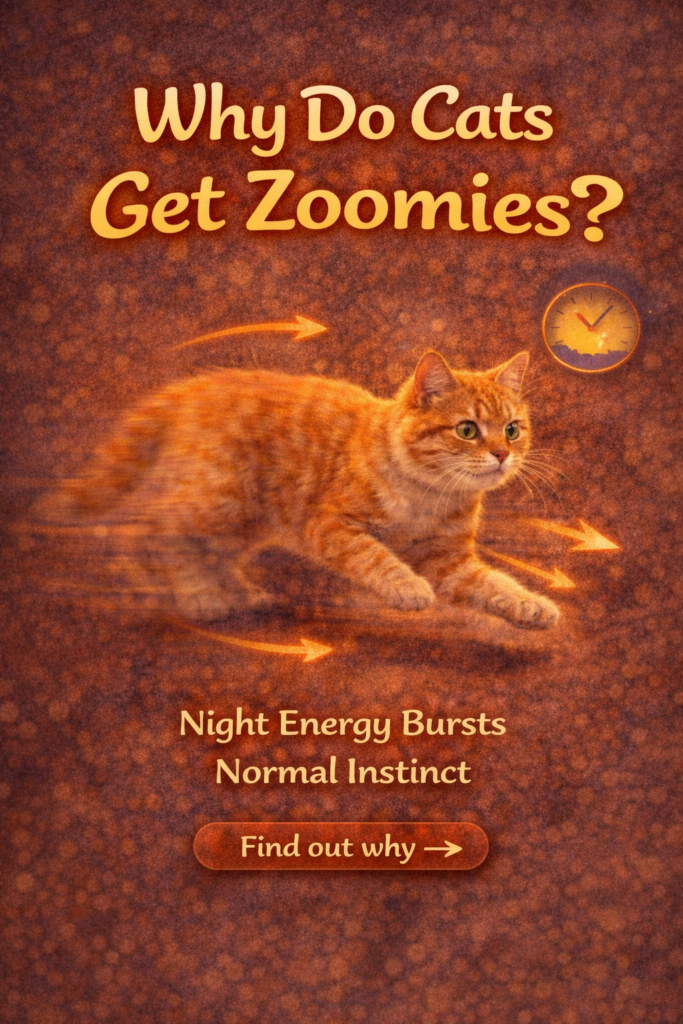
The Real Reason Your Cat Suddenly Explodes With Energy
One minute your cat is peacefully grooming or sleeping.
The next? They’re sprinting down the hallway, ricocheting off furniture, launching onto the couch, and tearing through the house like a tiny cheetah.
If you’ve ever witnessed this sudden burst of chaos, you’ve probably wondered:
Why do cats get the zoomies?
As someone who has lived with multiple cats over the years, I can tell you this:
The zoomies are completely normal.
In fact, they’re a fascinating glimpse into your cat’s natural instincts.
Let’s break down what’s happening, why it happens, and when it might signal something more than just playful energy.
What Are Cat Zoomies?
The official term for zoomies is:
FRAPs — Frenetic Random Activity Periods
During zoomies, cats may:
- Sprint suddenly across the house
- Jump onto furniture
- Make sharp turns mid-run
- Vocalize or chirp
- Flick their tail rapidly
- Appear wildly energetic for 30 seconds to a few minutes
Then, just as suddenly as it began, it stops.
And they walk away like nothing happened.
Why Do Cats Get the Zoomies?
There isn’t just one reason. Zoomies are usually the result of built-up energy combined with instinctive behavior.
Here are the main causes.
1️⃣ Hunting Instinct Triggered
Cats are natural ambush predators.
In the wild, they:
- Sleep for long stretches
- Wake suddenly
- Chase prey with explosive bursts of speed
Indoor cats don’t hunt for survival, but the instinct is still hard-wired into their nervous system.
Zoomies are often:
- Simulated hunting behavior
- An energy discharge
- A replay of predatory instincts
You’ll often notice zoomies happen:
- At dusk
- Late at night
- Early morning
This aligns with cats’ crepuscular nature — they’re most active at dawn and dusk.
2️⃣ Built-Up Energy Release
If your cat has been:
- Sleeping all day
- Indoors without stimulation
- Not actively playing
That energy has to go somewhere.
Zoomies are a pressure valve.
Think of it like a child who’s been sitting in class all day and finally gets recess.
Boom.
Full-speed release.
3️⃣ Post-Litter Box Zoomies
Many cats get zoomies right after using the litter box.
This is surprisingly common.
Why?
Possible reasons include:
- Relief response (feeling lighter)
- Nerve stimulation
- Instinctive “leave the area quickly” behavior
In the wild, cats would move away quickly from areas where scent might attract predators.
Even though your living room is safe, instinct still fires.
4️⃣ Emotional Release
Zoomies can also be tied to:
- Excitement
- Overstimulation
- Happiness
- Stress release
Sometimes after:
- Guests leave
- A loud noise stops
- You return home
Your cat may sprint off to regulate that burst of emotion.
5️⃣ Kitten Development
Kittens get zoomies constantly.
This supports:
- Muscle development
- Coordination
- Motor learning
- Hunting practice
Their nervous systems are developing rapidly, so energy spikes are normal.
When Do Zoomies Usually Happen?
Most commonly:
- 5–7 AM
- 8–10 PM
- After litter box use
- After long naps
- After meals
If your cat’s zoomies follow a predictable pattern, it’s likely just instinct.
Are Zoomies Healthy?
Yes — absolutely.
Zoomies indicate:
- Good muscle function
- Healthy energy levels
- Active neurological response
- Natural instinct expression
In fact, a cat that never plays or runs may need more stimulation.
How to Reduce Nighttime Zoomies
If zoomies are disrupting your sleep, here’s what works (from personal experience).
1️⃣ Structured Evening Play
Use:
- Wand toys
- Feather teasers
- Laser pointers (always end with a physical toy catch)
Simulate:
Hunt → Catch → Eat → Groom → Sleep
This mimics their natural cycle and reduces late-night bursts.
2️⃣ Feed After Play
A small meal after play encourages the body to wind down.
This is instinctively satisfying for cats.
3️⃣ Increase Daytime Enrichment
Try:
- Window perches
- Bird feeders outside
- Puzzle feeders
- Rotating toys
A mentally stimulated cat is less likely to store excess energy.
When Zoomies Might Not Be Normal
While rare, consult a vet if zoomies are paired with:
- Sudden aggression
- Vocal distress
- Over-grooming
- Compulsive behavior
- Disorientation
- Senior cat cognitive changes
If your cat seems confused rather than playful, that’s worth investigating.
But typical zoomies? Totally normal.
Do Cats Grow Out of Zoomies?
Not entirely.
Kittens zoom constantly.
Young adults zoom frequently.
Senior cats zoom occasionally — usually in shorter bursts.
The intensity may decrease, but the instinct never disappears.
Final Answer: Why Do Cats Get the Zoomies?
Cats get the zoomies because:
- They are natural predators
- They conserve energy during the day
- They release built-up energy suddenly
- Their hunting instinct activates at dusk and dawn
- Sometimes… they just feel good
Zoomies are a healthy, normal expression of feline behavior.
So the next time your cat tears through the house at full speed, don’t panic.
They’re not possessed.
They’re just being a cat.