
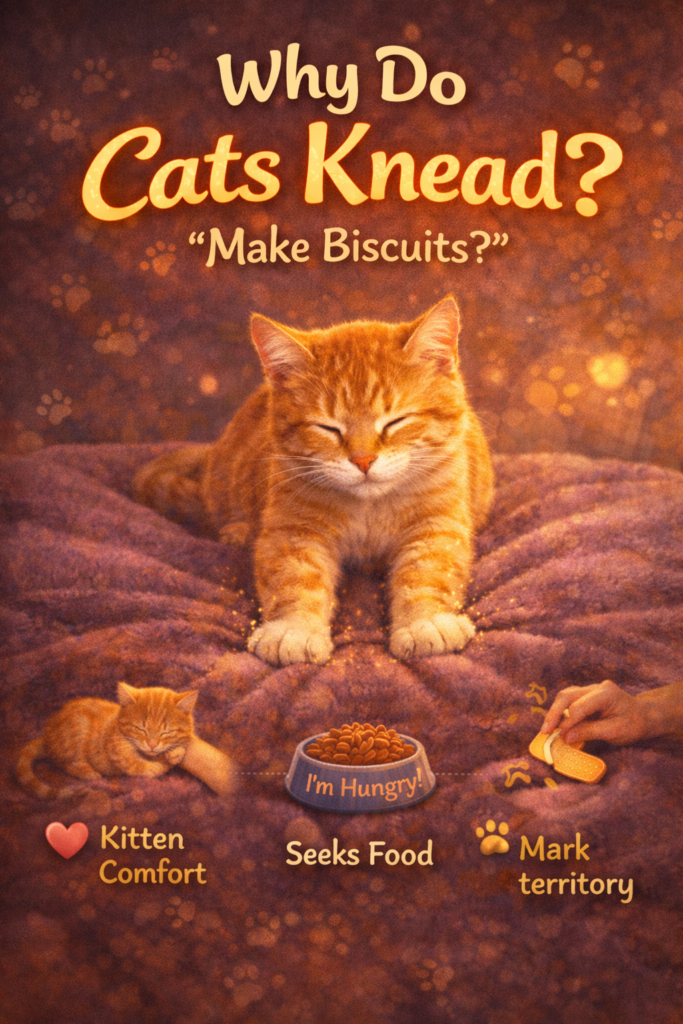
The Instinctive, Emotional, and Scent-Marking Reasons Behind This Adorable Behavior
If your cat presses their paws into your lap, a blanket, or the couch—pushing one paw, then the other—you’ve witnessed a behavior many cat owners lovingly call “making biscuits.”
But why do cats knead?
While kneading is undeniably cute, it’s not random. This behavior is deeply rooted in instinct, comfort, communication, and even territorial marking. In fact, kneading starts when cats are only days old and often continues throughout their entire lives.
In this guide, we’ll explore:
- What kneading is and where it comes from
- Why kittens knead their mother
- Why adult cats keep kneading
- What kneading says about your cat’s emotions
- Why some cats knead people (and sometimes with claws)
- When kneading is normal — and when it might signal stress
What Is Cat Kneading?
Kneading is a rhythmic motion where a cat:
- Alternates pressing their front paws
- Pushes into soft surfaces
- May extend and retract their claws
- Often purrs while doing it
Cats knead:
- Blankets
- Pillows
- Beds
- Clothing
- Their owners
The motion resembles kneading dough—hence the nickname making biscuits.
Where Does Kneading Come From?
Kneading Begins in Kittenhood 🐾
Kneading is an instinctive behavior that begins shortly after birth.
When kittens nurse, they knead their mother’s belly to:
- Stimulate milk flow
- Encourage let-down
- Increase comfort and bonding
This behavior is hard-wired, not learned. Even kittens that were orphaned early may still knead later in life.
Because kneading is associated with:
- Warmth
- Safety
- Nourishment
- Maternal comfort
…it becomes emotionally imprinted in a cat’s brain.
Why Do Adult Cats Continue to Knead?
Even though adult cats don’t need milk, kneading remains because it fulfills multiple emotional and biological purposes.
1. Comfort and Relaxation 😺
The most common reason adult cats knead is comfort.
Cats often knead when they feel:
- Safe
- Relaxed
- Content
- Emotionally secure
This is why kneading is frequently paired with:
- Purring
- Half-closed eyes
- Drooling (yes, really)
- Curling up to sleep
To a cat, kneading recreates the comforting sensations of kittenhood.
2. Marking Territory With Scent Glands
Cats have scent glands in their paw pads.
When a cat kneads, they:
- Release pheromones
- Mark the surface as familiar
- Claim people or objects as “theirs”
So when your cat kneads you, they’re not just being cute — they’re essentially saying:
“You belong to me, and I feel safe here.”
This is also why cats may knead:
- Favorite blankets
- Specific spots on the couch
- Your chest or stomach
3. Preparing a Sleeping Spot (Instinct)
In the wild, cats knead to:
- Flatten grass or leaves
- Remove debris
- Create a comfortable resting place
This instinct remains even for indoor cats.
If your cat kneads before lying down, they may be:
- “Making the bed”
- Testing softness
- Creating a safe sleeping zone
4. Expressing Affection and Bonding ❤️
Kneading is often a sign of trust and affection.
Cats are most likely to knead:
- Their favorite human
- Someone they feel bonded to
- A place associated with warmth and security
This behavior means your cat:
- Feels emotionally connected
- Trusts you completely
- Views you as a comfort figure
Why Do Some Cats Knead With Their Claws?
While adorable, kneading can sometimes be painful—especially if claws are involved.
Cats may knead with claws because:
- It’s a natural extension of the motion
- They’re deeply relaxed and not thinking about pressure
- They learned kneading without restraint as kittens
How to Reduce Painful Kneading
- Keep nails trimmed
- Place a thick blanket between you and your cat
- Gently redirect to a pillow or pet bed
⚠️ Avoid scolding — kneading is an emotional behavior, not misbehavior.
Why Do Some Cats Knead More Than Others?
Not all cats knead equally.
Factors that influence kneading include:
- Personality
- Early weaning (early-weaned cats may knead more)
- Stress levels
- Breed tendencies
- Strength of human bonding
Cats that were separated from their mother early may knead more intensely or frequently.
Is Kneading Ever a Sign of Stress?
Usually, kneading is positive — but context matters.
Kneading may be stress-related if paired with:
- Excessive drooling
- Compulsive behavior
- Vocalizing
- Anxiety signs
In these cases, kneading may act as a self-soothing mechanism, similar to thumb-sucking in humans.
If kneading becomes obsessive or sudden, it’s worth monitoring overall behavior.
Why Do Cats Knead and Purr Together?
Kneading and purring often go hand-in-hand because both behaviors are linked to:
- Contentment
- Emotional regulation
- Comfort
Purring may help:
- Calm the nervous system
- Reinforce bonding
- Enhance relaxation
Together, kneading and purring indicate a deeply relaxed and happy cat.
Should You Let Your Cat Knead You?
In most cases, yes — with boundaries.
Allow kneading if:
- Your cat is relaxed
- You’re comfortable
- You’ve added a blanket barrier
Redirect gently if:
- Claws hurt
- The behavior becomes overstimulating
Never punish kneading — it can damage trust.
Final Answer: Why Do Cats Knead (“Make Biscuits”)?
Cats knead because the behavior is instinctive, comforting, and emotionally meaningful.
Kneading:
- Originates in kittenhood nursing behavior
- Provides comfort and emotional security
- Helps cats mark territory with scent glands
- Signals trust, affection, and relaxation
When your cat kneads you, it’s one of the strongest signs that they feel safe, bonded, and at home.