
What Your Cat Is Really Trying to Tell You (and Why Adult Cats Meow at Humans)
If you’ve ever had a cat follow you from room to room, meowing nonstop, you’ve probably wondered:
Why do cats meow so much — and what does it mean?
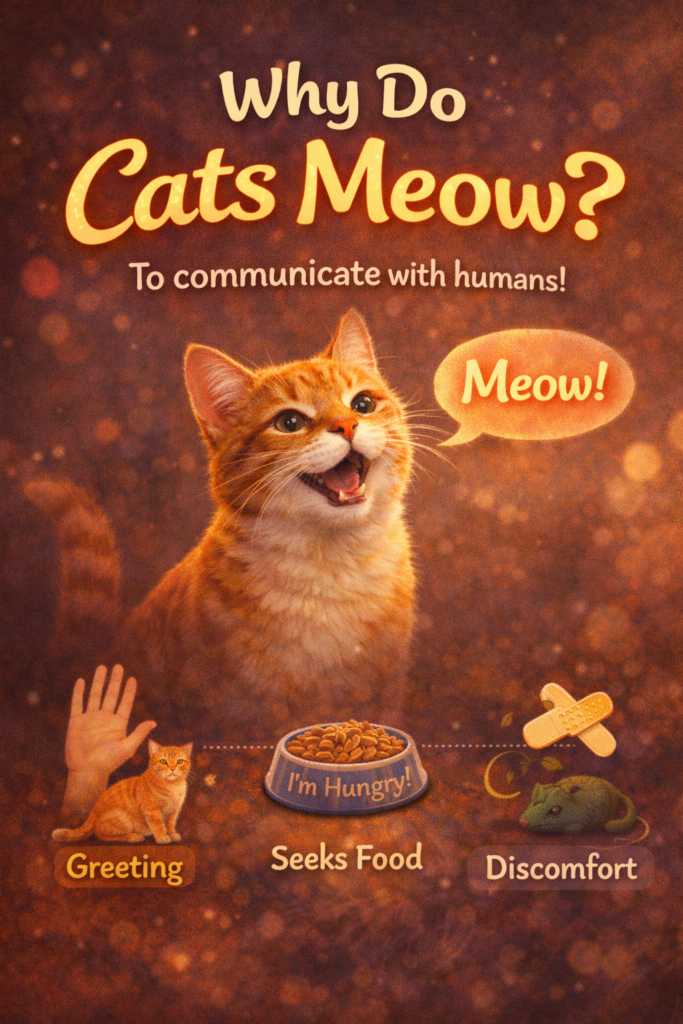
Meowing is one of the most misunderstood cat behaviors. While kittens meow to communicate with their mother, adult cats rarely meow at other cats. Instead, meowing is a behavior cats use primarily to communicate with humans.
In this article, we’ll explore:
- Why cats meow in the first place
- What different types of meows can mean
- Why some cats are more vocal than others
- When excessive meowing could signal a problem
- How to respond appropriately to your cat’s meows
Do Cats Meow at Each Other?
Surprisingly, adult cats almost never meow at other cats.
Cat-to-cat communication relies more on:
- Body language
- Scent marking
- Facial expressions
- Tail and ear position
- Hissing or growling (when needed)
Meowing is largely a human-directed behavior that domestic cats developed over time.
Why Do Cats Meow at Humans?
1. Cats Learn That Meowing Works 😺
Cats are intelligent and highly observant.
Early in life, kittens meow to:
- Get food
- Seek warmth
- Call their mother
When cats grow up and live with humans, they quickly learn:
“When I make this sound, humans respond.”
If meowing results in:
- Food
- Attention
- Play
- Petting
- Doors opening
…your cat is likely to keep doing it.
2. Meowing Is a Communication Tool
Cats use meowing to convey:
- Needs
- Emotions
- Requests
- Discomfort
- Curiosity
Unlike dogs, cats don’t bark or whine — meowing is their primary vocal bridge to humans.
Common Reasons Cats Meow
1. Hunger or Food Requests 🍽️
One of the most common reasons cats meow is to ask for food.
Cats may meow:
- Before scheduled meals
- Near food bowls
- Early in the morning
- When they hear food packaging
Some cats develop very specific “feed me” meows that owners recognize instantly.
2. Attention and Social Interaction
Cats are often more social than people expect.
Your cat may meow because they want:
- Petting
- Playtime
- Company
- To be followed
- To sit near you
This is especially common if:
- You’ve been busy
- You just got home
- Your cat feels bored or lonely
3. Greeting or Acknowledgement
Many cats meow as a way of saying:
- “Hello”
- “I see you”
- “Welcome home”
These meows are usually:
- Short
- Soft
- Paired with tail-up body language
4. Stress, Anxiety, or Confusion
Cats may meow more when they feel:
- Anxious
- Overstimulated
- Confused
- Disoriented
This can happen due to:
- Changes in routine
- New pets or people
- Moving homes
- Loud noises
- Rearranged furniture
Senior cats may meow due to cognitive changes that cause confusion or insecurity.
5. Seeking Access (Doors, Windows, Rooms)
Cats often meow when they want:
- A door opened
- Access to a window
- To go outside (or come back in)
- To explore a restricted space
If meowing has worked before, your cat will keep trying.
6. Pain or Illness
Meowing can also be a sign something isn’t right.
Cats may vocalize more if they’re experiencing:
- Pain
- Discomfort
- Illness
- Digestive upset
Warning signs include:
- Unusual tone or volume
- Crying or yowling
- Meowing paired with hiding, appetite loss, or lethargy
In these cases, a vet visit is important.
Different Types of Cat Meows (and What They Mean)
Cats don’t all meow the same way — and many owners can recognize different “meow meanings.”
Short Meow
- Greeting
- Acknowledgement
- Mild request
Multiple Meows
- Excitement
- Anticipation (often food-related)
Long, Drawn-Out Meow
- Demand
- Frustration
- Strong request
High-Pitched Meow
- Urgent need
- Discomfort
- Anxiety
Low, Loud Meow or Yowl
- Distress
- Anger
- Pain
- Territorial behavior
Context and body language are always key.
Why Some Cats Meow More Than Others
1. Personality
Some cats are naturally:
- More vocal
- More social
- More demanding
Others are quiet observers who rarely vocalize.
2. Breed Tendencies
Certain breeds are known for being more talkative, including:
- Siamese
- Bengal
- Oriental Shorthair
- Burmese
These cats often carry on full “conversations” with their owners.
3. Reinforcement From Humans
If meowing consistently results in:
- Food
- Attention
- Play
…cats learn to use it more frequently.
This is unintentional training.
When Is Meowing a Problem?
Occasional meowing is normal. Excessive or sudden meowing is not.
Contact a veterinarian if meowing is accompanied by:
- Appetite changes
- Weight loss
- Increased thirst
- Litter box issues
- Restlessness
- Aggression
- Confusion (especially in older cats)
Medical issues such as hyperthyroidism, pain, or cognitive dysfunction can increase vocalization.
How to Respond to Excessive Meowing
1. Don’t Reward Unwanted Meowing
Avoid:
- Feeding immediately when meowing
- Giving attention during demand vocalizing
Instead, reward calm behavior.
2. Increase Mental and Physical Stimulation
Daily play helps reduce boredom-based meowing:
- Interactive toys
- Puzzle feeders
- Window views
- Rotating enrichment
3. Stick to a Consistent Routine
Cats thrive on predictability:
- Regular feeding times
- Scheduled play
- Consistent sleep routines
This reduces anxiety-driven vocalization.
Final Answer: Why Do Cats Meow?
Cats meow primarily to communicate with humans.
Adult cats use meowing to:
- Ask for food
- Get attention
- Express emotions
- Communicate discomfort
- Interact socially
Meowing is learned, adaptive behavior — and one of the ways cats bridge the communication gap between species.
By listening to context, tone, and body language, you can better understand what your cat is trying to tell you.